

6061 aluminum alloy is one of the most widely used aluminum materials in modern mechanical manufacturing and CNC machining. However, when it comes to actual material selection, engineers often encounter three temper conditions that look similar at first glance: 6061-T6, 6061-T651, and 6061-T6511. They share exactly the same chemical composition and all belong to the Al-Mg-Si 6061 alloy family, but because their heat-treatment routes, stress-relief methods, and supply forms are different, they show significant differences in residual stress, flatness, post-machining distortion, dimensional stability, and the types of parts they are best suited for.
To specify material more accurately on drawings and in process planning, this article clearly defines these three tempers and then compares them from an engineering perspective, helping you make better selection decisions in real projects.
Understanding the Temper System (T-Series)
Temper codes for aluminum alloys (such as T6, T651, and T6511) describe the heat-treatment and mechanical stress-relief processes applied after the material is formed. The letter T indicates a thermally treated and artificially aged condition, while the digits that follow specify combinations of quenching, artificial aging, stretching, or mechanical straightening.
Different temper routes directly affect residual stress levels, dimensional stability after machining, and the typical product forms in which the material is supplied.
Understanding the temper system is therefore essential for distinguishing the differences among 6061-T6, 6061-T651, and 6061-T6511.
What Is 6061-T6?
6061-T6 refers to 6061 aluminum alloy in a standard strengthened condition obtained through solution heat treatment plus artificial aging. During solution treatment, magnesium and silicon fully dissolve into the aluminum matrix; rapid quenching then forms a supersaturated solid solution. Artificial aging subsequently promotes the precipitation of Mg₂Si strengthening phases, allowing the material to achieve its specified strength and hardness.
T6 is the most common and most easily sourced condition of 6061 aluminum, typically supplied as sheet, general plate, and extruded bars. With high strength and good machinability, 6061-T6 is the default choice for general mechanical parts, structural components, and standard machined pieces. However, because no stress-relief step is applied, the internal residual stress in T6 remains relatively high. For large pockets, heavy machining of thick plate, or strongly asymmetric material removal, it is more likely to warp or distort after machining.
What Is 6061-T651?
6061-T651 is a temper obtained by further processing on the basis of T6. After solution treatment and artificial aging, an additional stretch stress-relief step is applied. The plate is plastically stretched by about 1.5–3% along its main axis, which significantly reduces internal residual stress and improves plate flatness.
T651 is the most common supply condition for thick plate and precision machined plate. Its yield strength is essentially the same as that of T6, but under large-area milling, high-flatness requirements, or heavy machining, the dimensional stability of T651 is clearly superior to T6. For machine bases, equipment base plates, fixture plates, jigs, and mold bases where flatness is critical, 6061-T651 is the professional material choice.
What Is 6061-T6511?
6061-T6511 differs from T651 not in the sequence of heat treatment, but in product form and straightening method. T6511 is used for extruded profiles, such as bars, flats, shapes, and rails. After solution treatment and artificial aging, the extrusions undergo stretching or mechanical straightening to relieve stress, while the final product must still retain the original cross-sectional shape produced by extrusion.
Therefore, 6061-T6511 is most commonly used for long structural members, frame profiles, machine structures, and linear guiding elements. It offers better straightness than standard T6 extrusions and is less prone to twisting or bending after machining, making it the preferred choice for any profile-type part that is both long and requires secondary machining.
Key Differences Between 6061-T6, 6061-T651, and 6061-T6511
Heat Treatment and Stress-Relief Methods
Although 6061-T6, T651, and T6511 share the same chemical composition, their processing routes differ significantly. The key distinction is whether stress relief is applied and how it is performed.
6061-T6 undergoes solution heat treatment, quenching, and artificial aging. It develops high strength but retains relatively high internal residual stress, which increases the likelihood of distortion after heavy machining.
6061-T651 follows the same heat-treatment sequence as T6 but adds 1.5–3% controlled stretching. This stretch stress-relief process releases and equalizes internal stresses, resulting in better flatness and more predictable dimensional stability, especially for thick plate.
6061-T6511 uses a stress-relief method similar to T651 but is optimized for extruded shapes. The material is stretched or mechanically straightened while preserving the original extruded cross-section, improving straightness and stability for long profiles and structural bars.
These differences lead to varying levels of internal stress uniformity, through-thickness stability, and dimensional consistency after machining.
Mechanical Property Ranges
The three tempers have very similar strength levels; the differences arise mainly from product form and stress state, not from the inherent alloy. Typical property ranges are shown below (non-guaranteed values):
| Temper | Tensile Strength (MPa) | Yield Strength (MPa) | Elongation (%) | Notes |
|---|---|---|---|---|
| 6061-T6 | 260–310 | 240–280 | 12–17 | Common for sheet, plate, bars |
| 6061-T651 | 260–310 | 240–280 | 10–16 | Stress-relieved plate with improved flatness |
| 6061-T6511 | 260–310 | 240–280 | 8–12 | Stress-relieved extrusions with better straightness |
The tensile and yield strength values fall in the same range, but elongation and dimensional stability differ. Because T651 and T6511 undergo stretching or straightening, they generally maintain more uniform stress distribution and better stability during heavy machining compared with T6.
esidual Stress and Dimensional Stability
Residual stress is one of the most important engineering factors affecting geometric accuracy and shape retention after machining.
6061-T6 retains relatively high residual stress from solution treatment and quenching. As a result, large pocketing, heavy thickness reduction, or asymmetric machining can easily lead to warping, twisting, or uneven distortion once the part is unclamped.
6061-T651 undergoes stretch stress relief, producing a more uniform internal stress distribution. During roughing or unclamping, T651 plate typically maintains its shape more reliably, making it suitable for thick-plate machining, fixture plates, tooling bases, and deep-pocket structures.
6061-T6511 is optimized for extruded shapes and significantly reduces the tendency for bending and twisting, improving straightness and dimensional stability in long bars, rails, connectors, and structural profiles. Compared with standard T6 extrusions, T6511 extrusions hold straightness much more effectively.
Machining Behavior and Deformation Trend
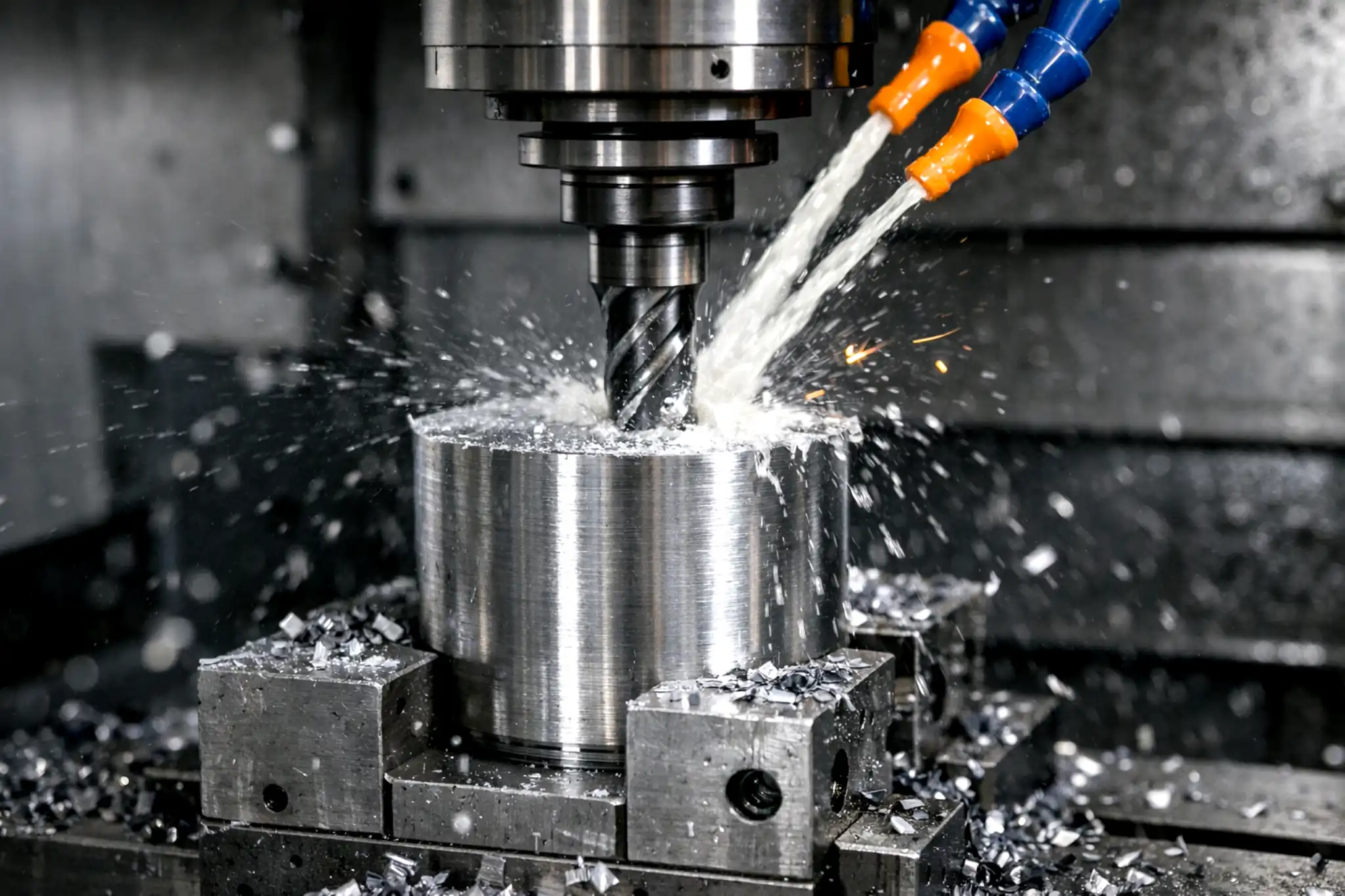
From a cutting-tool perspective, all three tempers machine similarly and fall within the category of well-machinable aluminum alloys. The real differences appear after substantial material removal.
6061-T6 can experience noticeable elastic stress release during heavy machining—especially in thick-plate pocketing or thin-wall structures. This often leads to significant movement or distortion after roughing or unclamping.
6061-T651 carries lower residual stress, so it typically shows smaller dimensional changes and more stable flatness after heavy cuts. This makes it more reliable for deep pockets, large-area milling, and precision plate machining.
6061-T6511 consistently outperforms standard T6 extrusions when machining long extruded components. It exhibits less twist and bow, reducing the need for repeated setups or correction passes and maintaining better straightness throughout machining.
Stock Form and Shape Stability
Each temper corresponds strongly to its typical stock form and intended use.
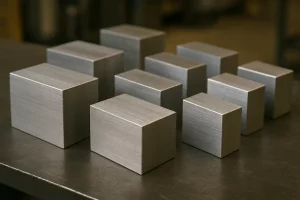
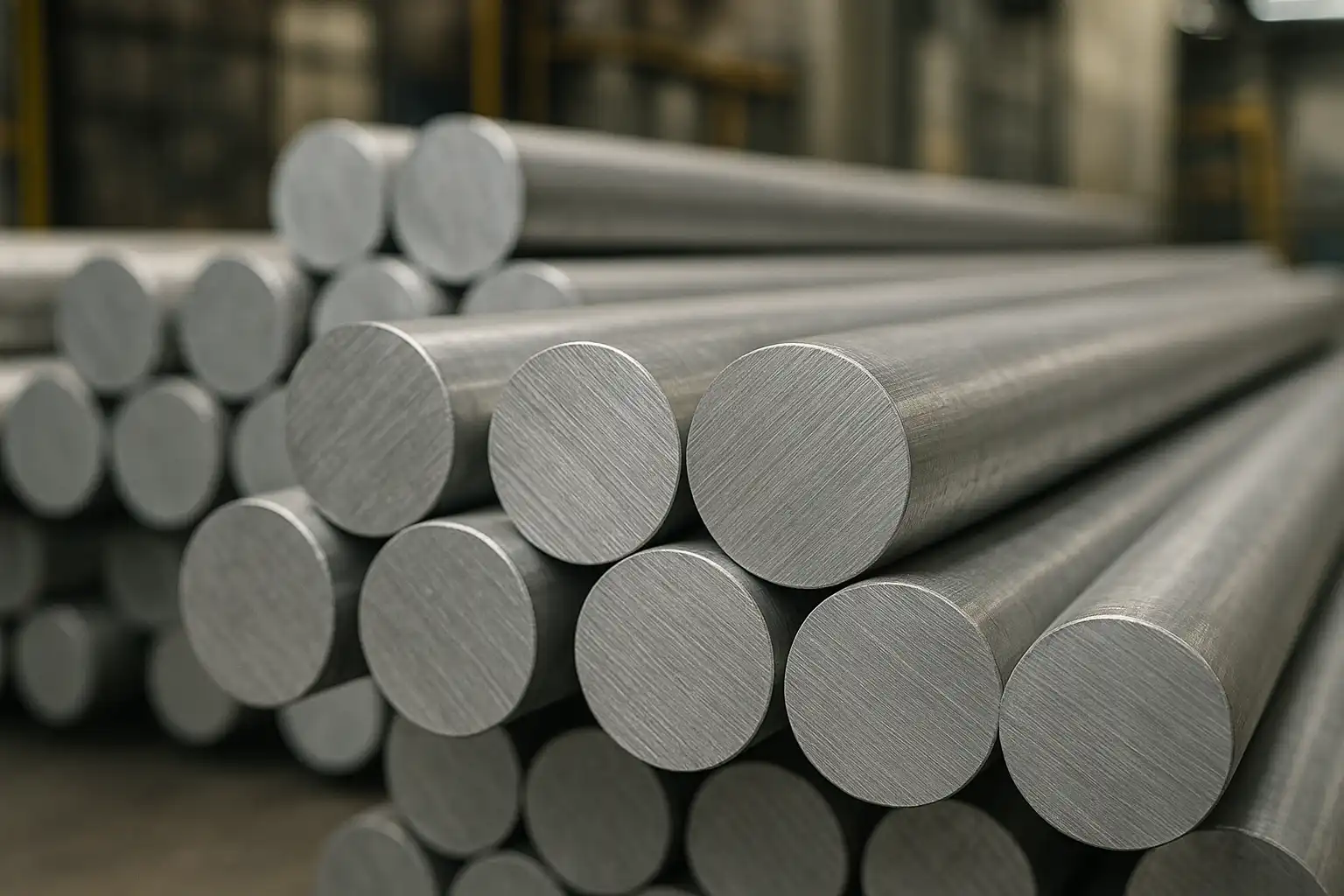
6061-T6 is commonly supplied as sheet, standard plate, and general extruded bars, making it suitable for general-purpose parts where deformation sensitivity is moderate.
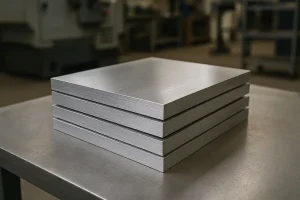
6061-T651 is mainly offered as thick plate, precision plate, or milled-face tooling plate. It provides higher flatness and more consistent through-thickness stability, making it ideal for precision plate-type components, machine bases, fixture plates, and equipment mounting surfaces.
6061-T6511 applies to extruded profiles, such as rails, structural sections, flats, and long bars. These parts require high straightness and reliable retention of the original extruded shape, especially when secondary machining is involved.
These differences in stock form naturally divide their application domains:
plates favor T651, extrusions favor T6511, while T6 serves general-purpose needs.
Cost and Availability
In most markets, 6061-T6 has the highest availability and the lowest cost, making it the preferred option for cost-sensitive applications and general-purpose use.
6061-T651 is slightly more expensive due to its additional stretch stress-relief process, but the improved dimensional stability often reduces rework, machining time, and scrap, resulting in lower overall manufacturing risk.
6061-T6511 typically costs a bit more than standard T6 extrusions but offers superior straightness and dimensional stability, providing excellent value for long profiles, rails, and structural extrusions where geometry retention is critical.
Typical Application Differences
6061-T6 is suited for general structural parts, housings, brackets, covers, and small-to-medium machining tasks where deformation risk is modest and extreme flatness or straightness is not critical.
6061-T651 is widely used for machine bases, fixture plates, equipment mounting plates, tooling blocks, and other plate-type components that require high flatness, stable geometry, and predictable behavior after heavy machining.
6061-T6511 is preferred for long extruded profiles, such as rails, connectors, frame members, structural bars, and any extruded shape that requires both length and secondary machining while maintaining excellent straightness.
How to Choose Between 6061-T6, 6061-T651, and 6061-T6511?
Once 6061 aluminum has been chosen for a project, selecting between T6, T651, and T6511 mainly depends on part geometry, machining strategy, material removal volume, and sensitivity to deformation.
- For plate-type parts with heavy machining and flatness requirements
Choose 6061-T651. Its reduced-stress condition and improved flatness make it a safer and more predictable choice for large-area milling, deep pocketing, and thick-plate roughing. T651 plate tends to maintain shape more reliably after roughing and unclamping, minimizing warping and distortion. - For long extruded components where straightness is critical
Choose 6061-T6511. For frame members, rails, connectors, and other structural profiles that depend on straightness and stable cross-section geometry, T6511 generally performs better than standard T6 extrusions. It offers improved straightness and reduced twisting, especially when significant secondary machining is required. - For smaller, less-critical parts with moderate machining
Choose 6061-T6. When parts are relatively small, involve limited material removal, or are not particularly sensitive to deformation, T6 is fully adequate and often preferred because of its wide availability, lower cost, and flexible sourcing.
In practice, a simple rule is: for parts involving heavy machining and tight flatness or straightness requirements, use T651 or T6511; for standard geometry and moderate machining, T6 provides an excellent balance of cost and performance.
Conclusion
6061-T6, 6061-T651, and 6061-T6511 are fundamentally the same 6061 aluminum alloy. Their differences come from heat-treatment paths and the presence or absence of stress-relief processes, which lead to distinct behaviors in machining stability, residual stress levels, flatness, straightness, and suitability for different part types.
In terms of strength, all three belong to the same class. In actual engineering use, however, T651 and T6511 offer significantly better dimensional stability than T6, making them the preferred options for precision plates, long extruded members, frames, and heavy-machining applications.
Clearly specifying the base alloy + temper + stock form in drawings or process plans helps suppliers understand requirements accurately and allows machining teams to control distortion more effectively, improving consistency and reliability in the final parts.