
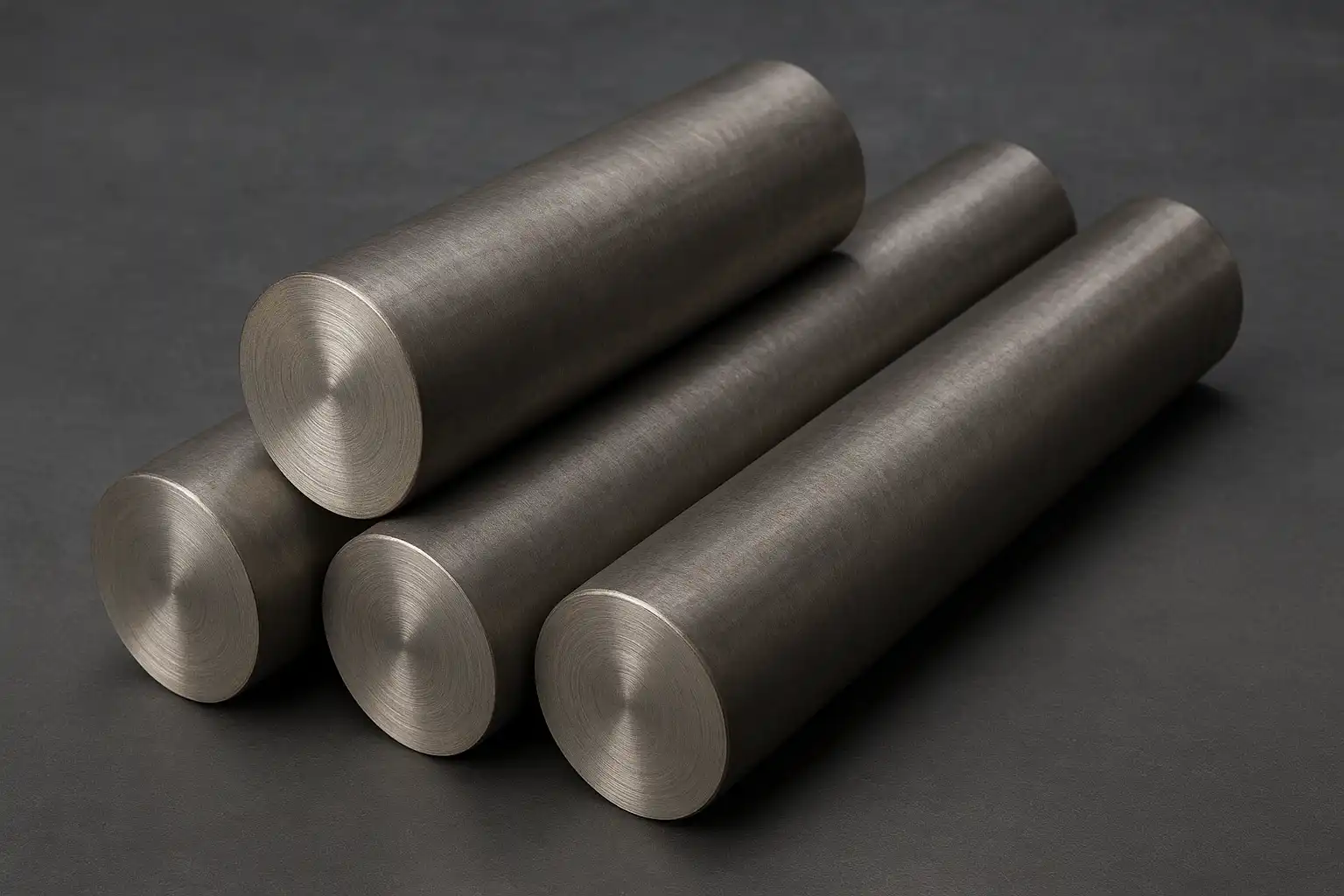

Inconel 718 is a precipitation-hardening nickel-chromium-iron superalloy engineered for reliable performance in extreme environments exceeding 700 °C (1300 °F). It combines exceptional yield strength, creep resistance, thermal stability, and corrosion resistance, which makes it one of the most widely used high-temperature alloys in jet engines, gas turbines, deep-well oil and gas tools, and advanced energy systems.
Compared with other superalloys such as Waspaloy or the Rene series, Inconel 718 is particularly valued for its unique γ″ strengthening mechanism and outstanding weldability, giving it unparalleled versatility across aerospace and heavy-industry applications.
What Is Inconel 718?
Inconel 718 is a precipitation-hardening nickel-based superalloy strengthened primarily by the formation of γ″ (Gamma Double Prime, Ni₃Nb) and γ′ (Gamma Prime, Ni₃(Al,Ti)) during aging. These metallurgical phases give the alloy its signature high strength, fatigue resistance, and long-term thermal stability.
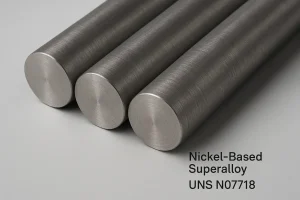
Material Standards
- UNS: N07718
- W.Nr. (DIN): 2.4668
- Common Names: Alloy 718, Nickel 718, Inconel 718
One of Inconel 718’s most important advantages is its slow precipitation kinetics of the γ″ phase, which greatly reduces susceptibility to weld heat-affected-zone cracking. As a result, it is considered one of the most weldable superalloys available.
Chemical Composition
Inconel 718’s high-temperature strength and oxidation resistance originate from the following chemical elements. The ≈5% Nb (niobium) content is the defining feature enabling γ″ precipitation strengthening.
| Element | Weight % | Function |
|---|---|---|
| Nickel (Ni) | 50.0–55.0 | Provides matrix stability and corrosion resistance. |
| Chromium (Cr) | 17.0–21.0 | Forms protective oxides; improves oxidation and corrosion resistance. |
| Iron (Fe) | Balance | Improves manufacturability and cost efficiency. |
| Niobium (Nb) + Tantalum (Ta) | 4.75–5.50 | Key γ″ strengthening element (Ni₃Nb). |
| Molybdenum (Mo) | 2.80–3.30 | Solid-solution strengthening; enhances pitting resistance. |
| Titanium (Ti) | 0.65–1.15 | Supports γ′ formation; contributes to hardening. |
| Aluminum (Al) | 0.20–0.80 | Improves oxidation resistance and γ′ precipitation. |
Physical & Chemical Properties
These properties determine Inconel 718’s performance in thermal, mechanical, and corrosive environments.
Physical Properties
- Density: 8.19 g/cm³ (0.296 lb/in³)
- Melting Range: 1260–1336 °C
- Thermal Conductivity: 11.4 W/m·K at 21 °C
→ Low conductivity increases cutting-edge temperatures during machining. - Thermal Expansion: 13.0 µm/m·°C (20–100 °C)
- Magnetic Properties: Non-magnetic
Chemical Properties
- High-temperature oxidation resistance: Stable protective oxide up to ~980 °C
- Corrosion resistance: Excellent in acids, bases, seawater, and chloride environments
- Stress-corrosion cracking (SCC) resistance: Strong resistance in sour gas (H₂S) and chloride environments
- NACE MR0175 compliant: Commonly used in oil and gas downhole tools
Mechanical Properties
Typical values for AMS 5663 (forged, aged condition):
- Tensile Strength: ≥1240 MPa (180 ksi)
- Yield Strength (0.2% offset): ≥1034 MPa (150 ksi)
- Elongation: ≥12%
- Hardness: 36–44 HRC
- High-temperature strength retention: >80% of room-temperature strength at 650 °C
- Creep resistance: Excellent long-term stability under sustained loads
Manufacturing & Processing Characteristics
Inconel 718 is known for its high-temperature strength and precipitation-hardened microstructure, which significantly influence its machinability, weldability, and heat-treatment response.
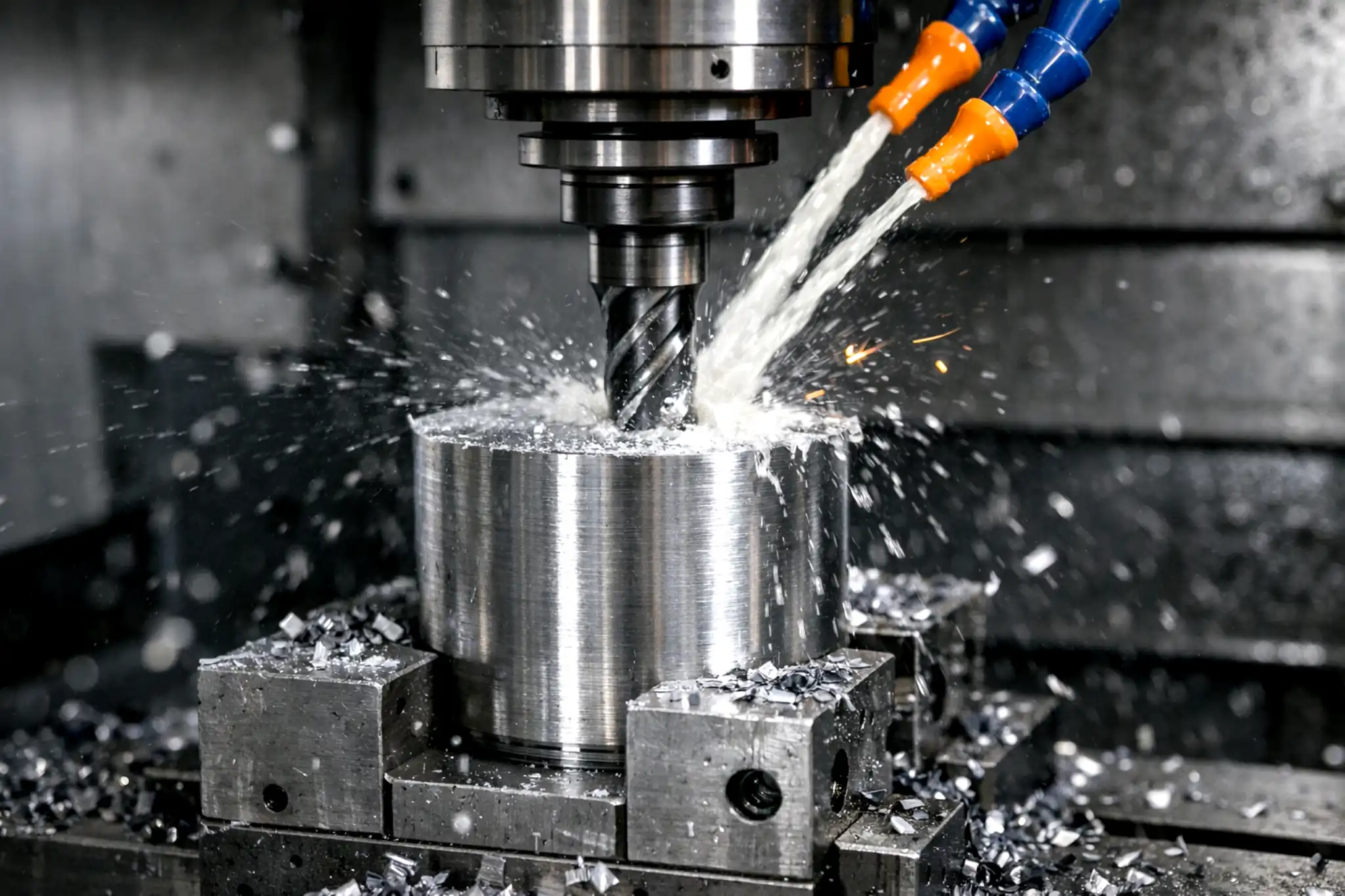
Its machinability is generally rated at 10–15% (vs. 100% for AISI B1112 steel), and this low rating is primarily due to work hardening, heat accumulation, and carbide-induced tool wear.
Machining Characteristics
Inconel 718 is classified as a difficult-to-machine alloy because of several intrinsic material behaviors:
• Severe Work Hardening
The alloy work-hardens almost immediately when the cutting tool contacts its surface. As strain accumulates, the hardened layer increases cutting forces and tool load.
• Low Thermal Conductivity
Heat generated during machining cannot dissipate efficiently. Most of the thermal energy remains concentrated at the cutting edge, accelerating wear and thermal cracking.
• Abrasive Carbides
Niobium-rich carbides present in the microstructure act as hard abrasive particles. These carbides shorten tool life and require robust tooling materials.
Together, these factors result in low machining speeds, frequent tool changes, and strict requirements for thermal control.
Weldability
Unlike many precipitation-hardened superalloys, Inconel 718 offers excellent weldability. The γ″ phase precipitates slowly, which minimizes the risk of:
- Heat-affected-zone cracking
- Strain-age cracking
- Post-weld embrittlement
Inconel 718 is compatible with TIG, MIG, EBW, and laser welding. After welding, the alloy can undergo full aging to restore its mechanical strength.
Heat Treatment
Inconel 718 responds strongly to precipitation-hardening heat treatment. Its strength derives mainly from γ″ (Ni₃Nb) with support from γ′ (Ni₃(Al,Ti)).
Key heat-treatment characteristics include:
- Solution Annealing dissolves existing precipitates and homogenizes the matrix.
- Double Aging promotes controlled precipitation of γ″ and γ′ phases, achieving maximum strength.
- Stable Microstructure results in excellent creep resistance and long-term structural integrity at elevated temperatures.
This heat-treatment behavior enables Inconel 718 to maintain high mechanical performance in aerospace, turbine, and oil-gas environments.
Applications
Inconel 718 is used in environments that demand high strength, oxidation resistance, and fatigue stability at elevated temperatures.
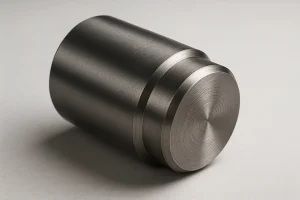 Because of its balance of weldability, creep resistance, and long-term structural stability, it is widely adopted across aerospace, energy, and heavy-duty industrial systems. Typical application categories include:
- Aerospace components, such as turbine discs, compressor blades, engine casings, and high-temperature fasteners.
- Oil & gas downhole equipment, including downhole tools, safety valves, and Christmas-tree components designed for H₂S-containing environments.
- Energy and nuclear systems, particularly gas-turbine hot-section parts and reactor structural components requiring long-term thermal stability.
- Rocketry and spaceflight hardware, such as liquid-rocket turbopump housings and cryogenic propellant tank structures.
FAQ
Q1: Is Inconel 718 stronger than titanium alloys (Ti-6Al-4V)?
Yes. Although titanium alloys are lighter, they lose strength rapidly above 400 °C. Inconel 718 maintains exceptional strength and creep resistance even at 700 °C, making it superior for high-temperature applications.
Q2: Is Inconel the strongest metal?
Inconel 718 is one of the strongest metals at elevated temperatures. While some steels surpass its room-temperature strength, few materials can match its performance above 600 °C.
Q3: Are Nickel 718 and Inconel 718 the same material?
Yes. “Inconel” is a trademark of Special Metals Corporation, while “Nickel 718” is a generic name. Both designate the same alloy under UNS N07718.
Conclusion
Inconel 718 delivers a unique combination of high-temperature strength, excellent weldability, and long-term stability, making it indispensable in extreme engineering environments. From jet-engine turbine discs to deep-well oil-and-gas tools, it remains one of the most trusted superalloys in modern industry.
For manufacturers, understanding its work-hardening behavior, low thermal conductivity, and rapid tool-wear tendencies is essential to achieving high-quality CNC machining results. With extensive experience in nickel-based superalloys, we provide precision-machined Inconel 718 components that meet demanding AMS and ASTM specifications.