
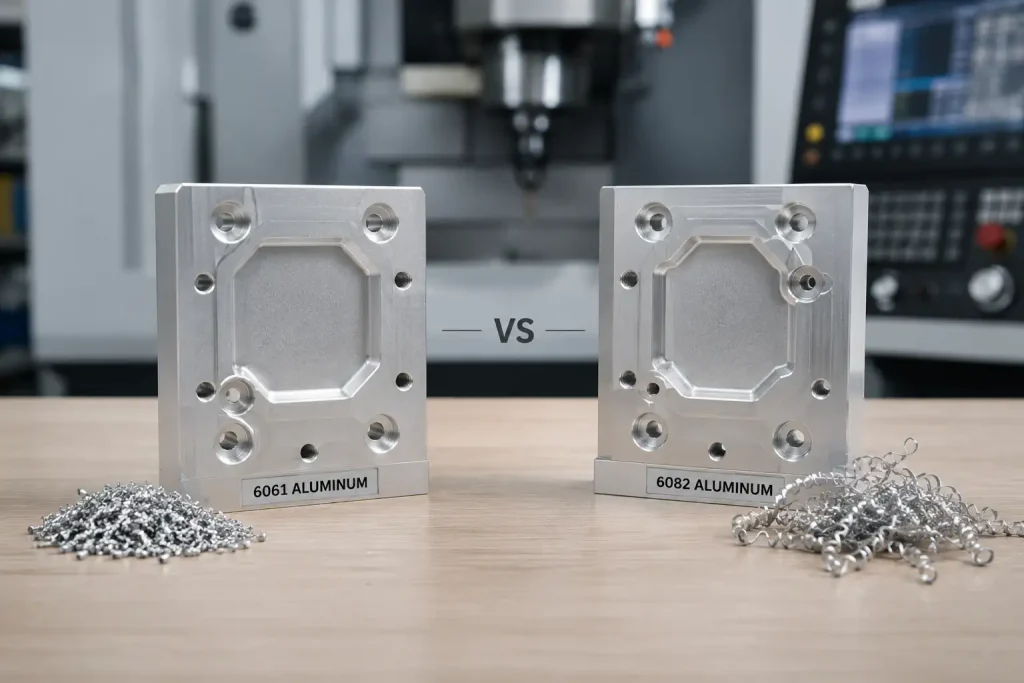

A la hora de seleccionar una aleación de aluminio para piezas mecanizadas con CNC, suele compararse entre sí a las aleaciones 6061 y 6082. Ambas ofrecen una buena maquinabilidad, resistencia a la corrosión y relación resistencia-peso, pero difieren en cuanto a propiedades mecánicas, disponibilidad del material y aplicaciones habituales.
Este artículo compara los aleaciones 6061 y 6082 en cuanto a composición química, propiedades mecánicas, maquinabilidad, soldabilidad, coste y aplicaciones. Además, explica las diferencias entre las aleaciones 6061-T6 y 6082-T6 para facilitar la selección de materiales en proyectos de ingeniería.
¿Qué es el aluminio 6082?
El 6082 es una aleación de aluminio, magnesio y silicio de la serie 6000, susceptible de tratamiento térmico, con un contenido de manganeso superior al del 6061. En los estados de temple T6 habituales, suele ofrecer una resistencia mecánica mínima más elevada, lo que la hace adecuada para soportes que soportan cargas, bastidores de máquinas, chapas estructurales y componentes de transporte.
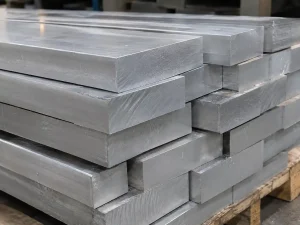
El 6082 se utiliza ampliamente en Europa y en proyectos basados en las normas de materiales EN. Los estados de temple más habituales son el T4, el T5, el T6 y el T6511. Para el mecanizado CNC, se suelen elegir el T6 y el T6511 cuando la resistencia o la estabilidad dimensional son requisitos importantes.
¿Qué es el aluminio 6061?
El 6061 es también una aleación de aluminio, magnesio y silicio de la serie 6000 susceptible de tratamiento térmico. Ofrece una combinación equilibrada de resistencia, maquinabilidad, soldabilidad, resistencia a la corrosión y disponibilidad del material, lo que la convierte en una aleación de uso general muy habitual para el mecanizado CNC.
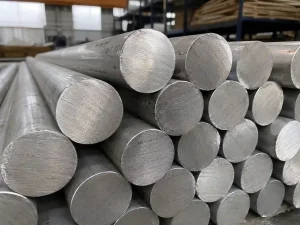
El 6061 se encuentra ampliamente disponible en las cadenas de suministro de Norteamérica y a nivel internacional. Los estados de temple más habituales son el T4, el T6, el T651 y el T6511. Entre sus aplicaciones típicas se incluyen carcasas de máquinas, accesorios de fijación, placas de montaje, bloques de válvulas, conectores y conjuntos soldados.
¿Cuáles son las diferencias entre el aluminio 6061 y el 6082?
A la hora de elegir entre el aluminio 6061 y el 6082 para un proyecto de mecanizado CNC, es importante comprender en qué se diferencian en cuanto a rendimiento y aplicación. Ambos pertenecen a la familia de aleaciones de aluminio de la serie 6000 y ofrecen una buena resistencia a la corrosión y mecanizabilidad, pero sus composiciones químicas y propiedades mecánicas no son idénticas.
El 6061 se utiliza habitualmente para piezas que requieren una combinación equilibrada de maquinabilidad, soldabilidad y versatilidad de fabricación. En los estados de temple habituales, el 6082 suele ofrecer una mayor resistencia y se elige con mayor frecuencia para aplicaciones estructurales y de soporte de carga. En los apartados siguientes se comparan ambas aleaciones en cuanto a composición química, propiedades mecánicas, maquinabilidad, soldabilidad, coste y aplicaciones típicas.
Composición química
Tanto el 6061 como el 6082 utilizan magnesio y silicio como principales elementos de aleación, pero se diferencian en los rangos especificados de silicio, manganeso, cobre y cromo.
| Elemento de aleación | Aluminio 6061 | Aluminio 6082 |
|---|---|---|
| Silicio (Si) | 0,40%–0,80% | 0,70%–1,30% |
| Magnesio (Mg) | 0,80%–1,20% | 0,60%–1,20% |
| Hierro (Fe) | ≤0,701 TP3T | ≤0,501 TP3T |
| Cobre (Cu) | 0,15%–0,40% | ≤0,101 TP3T |
| Manganeso (Mn) | ≤0,15% | 0,40%–1,00% |
| Cromo (Cr) | 0,04%–0,35% | ≤0,25% |
| Zinc (Zn) | ≤0,25% | ≤0,201 TP3T |
| Titanio (Ti) | ≤0,15% | ≤0,101 TP3T |
| Aluminio (Al) | Saldo | Saldo |
El 6082 suele presentar rangos de silicio y manganeso más elevados que el 6061, siendo su mayor contenido en manganeso una de las diferencias composicionales más notables. Por el contrario, el 6061 contiene cantidades específicas de cobre y cromo.
Estas diferencias composicionales afectan a la microestructura y a la respuesta al tratamiento térmico de las dos aleaciones, lo que a su vez se refleja en sus propiedades mecánicas. Su rendimiento real debe evaluarse en función de las condiciones de templado, como T6, T651 o T6511.
Propiedades
Tanto el 6061 como el 6082 ofrecen una buena resistencia mecánica, resistencia a la corrosión y ligereza. El 6061 se utiliza con mayor frecuencia para aplicaciones generales de mecanizado, mientras que el 6082 suele elegirse para piezas estructurales y de soporte de carga debido a su mayor resistencia mecánica.
Densidad
Tanto la aleación 6061 como la 6082 tienen una densidad de aproximadamente 2,70 g/cm³, por lo que la diferencia de peso es mínima. Ambas aleaciones son adecuadas para los sectores aeroespacial, de la automoción, del transporte y de las estructuras mecánicas, en los que la reducción de peso es importante.
Fuerza
El 6082 suele presentar una resistencia global superior a la del 6061, lo que lo hace más adecuado para maquinaria pesada, estructuras de edificios y componentes de transporte. El 6061 ofrece una resistencia moderada, junto con una buena maquinabilidad y soldabilidad, por lo que se utiliza habitualmente para piezas mecánicas generales.
Resistencia a la tracción
En los estados de templado T6 habituales, la resistencia a la tracción del 6061 suele situarse entre 260 y 290 MPa, mientras que la del 6082 suele oscilar entre 280 y 310 MPa. El 6082 puede soportar cargas de tracción más elevadas y se utiliza con mayor frecuencia para soportes, bastidores y uniones estructurales sometidos a grandes esfuerzos. El 6061 se utiliza habitualmente para carcasas, accesorios, placas de montaje y otras piezas generales mecanizadas con CNC.
Límite elástico
El límite elástico del 6061-T6 suele ser de unos 240 MPa, mientras que el del 6082-T6 suele situarse entre 250 y 260 MPa. El 6082 ofrece una mayor resistencia a la deformación permanente bajo carga, lo que hace que sea más habitual en estructuras de edificios, equipos de transporte y componentes que soportan carga.
Resistencia a la corrosión
Tanto la aleación 6061 como la 6082 ofrecen una buena resistencia a la corrosión. La aleación 6061 se utiliza habitualmente en equipos para exteriores, automoción y náutica en general, mientras que la 6082 se emplea a menudo en la construcción, el transporte y entornos industriales. Ambas aleaciones también pueden someterse a un proceso de anodizado para mejorar la protección de la superficie.
Maquinabilidad
Tanto el 6061-T6 como el 6082-T6 ofrecen una buena maquinabilidad y pueden utilizarse para el fresado, el torneado y el taladrado con CNC. El 6061-T6 suele ser más fácil de mecanizar y resulta muy adecuado para una amplia gama de piezas generales mecanizadas con CNC.
El 6082-T6 también es adecuado para el mecanizado, pero su mayor resistencia y dureza pueden requerir ajustes en la velocidad de corte, la velocidad de avance y los parámetros de las herramientas. Por ello, el 6061-T6 se utiliza con mayor frecuencia para el mecanizado general, mientras que el 6082-T6 suele elegirse para piezas mecanizadas que requieren una mayor resistencia.
Soldabilidad
Tanto el 6061-T6 como el 6082-T6 presentan una buena soldabilidad y pueden unirse mediante métodos habituales de soldadura de aluminio, como la soldadura MIG y la soldadura TIG. El 6061-T6 suele ser más fácil de soldar y, por ello, se utiliza habitualmente para bastidores soldados, soportes y conjuntos estructurales.
El 6082-T6 también se puede soldar, pero su mayor resistencia implica que los parámetros de soldadura, el aporte de calor y el control de la deformación pueden requerir un mayor cuidado. Para proyectos que impliquen soldaduras complejas o un gran número de uniones soldadas, el 6061-T6 suele ser más habitual.
Coste
No existe una diferencia de precio global fija entre el aluminio 6061 y el 6082. El coste real del material suele depender de la región de compra, la forma del producto, el estado de temple, el tamaño y la cantidad del pedido. En Norteamérica y en muchos mercados internacionales, el 6061 está más ampliamente disponible en tamaños habituales de chapas, barras y perfiles extruidos, por lo que a menudo resulta más fácil y económico de adquirir.
El 6082 es más habitual en Europa y en las cadenas de suministro que se basan en las normas de materiales EN. Cuando hay existencias locales disponibles, su precio puede ser similar al del 6061. En otras regiones, los costes de importación, las cantidades mínimas de pedido y los tamaños de material a medida pueden aumentar el coste de adquisición del 6082.
Cuando un proyecto requiere la mayor resistencia que ofrece el 6082, el coste adicional del material puede estar justificado. Para piezas mecánicas generales, el 6061 suele ofrecer un equilibrio más práctico entre rendimiento, disponibilidad y coste.
Aplicaciones típicas
El aluminio 6061 se utiliza ampliamente en los sectores aeroespacial, de la automoción, naval y de la fabricación mecánica en general. Entre las piezas típicas se incluyen carcasas de máquinas, bastidores, soportes, placas de montaje, dispositivos de fijación y conectores. Su resistencia moderada, su buena maquinabilidad y su soldabilidad lo hacen adecuado para piezas mecanizadas con CNC en general y para conjuntos soldados.
El aluminio 6082 se utiliza habitualmente en los sectores de la construcción, el transporte, la maquinaria pesada y la ingeniería estructural. Entre las piezas típicas se incluyen soportes de carga, vigas estructurales, bastidores de maquinaria, placas de unión y componentes mecanizados de alta resistencia. A menudo se elige para aplicaciones que requieren una mayor resistencia a la tracción, límite elástico y capacidad de carga.
¿Cuál es la diferencia entre el aluminio 6061-T6 y el 6082-T6?
La designación T6 indica que la aleación de aluminio ha sido sometida a un tratamiento térmico de solubilización seguido de un envejecimiento artificial. Tanto la 6061 como la 6082 se suministran habitualmente en el estado T6 para piezas mecanizadas con CNC, conjuntos soldados y componentes estructurales. Sin embargo, las diferencias en la composición de la aleación dan lugar a variaciones en la resistencia, la maquinabilidad, la soldabilidad y la conformabilidad.
Resumen comparativo
La tabla siguiente resume las principales diferencias entre el aluminio 6061-T6 y el 6082-T6.
| Comparación | 6061-T6 | 6082-T6 | Resultado de la comparación |
|---|---|---|---|
| Fuerza | Moderado | Más alto | El 6082-T6 tiene la ventaja de que |
| Resistencia a la corrosión | Bien | Bien | En general, comparables |
| Maquinabilidad | Bien; por lo general, el corte es más fácil de controlar | Bien; puede que haya que ajustar los parámetros de corte. | El 6061-T6 tiene la ventaja de que |
| Soldabilidad | Bien; en general, es más fácil controlar el aporte de calor y la distorsión. | Bien; requiere un control más preciso de la potencia calorífica y de la distorsión | El 6061-T6 tiene la ventaja de que |
| Conformabilidad | Bien; apto para flexiones ligeras | Moderado; mayor riesgo de recuperación elástica y agrietamiento | El 6061-T6 tiene la ventaja de que |
| Aplicaciones típicas | Carcasas de máquinas, placas de montaje, accesorios de sujeción, soportes, bastidores y conjuntos soldados | Soportes de carga, vigas estructurales, bastidores de máquinas, placas de unión y componentes de transporte | Enfoque diferente en cuanto a las aplicaciones |
| Disponibilidad de materiales | Ampliamente disponible en Norteamérica y en muchos mercados internacionales | Más habitual en Europa y en las cadenas de suministro basadas en la norma EN | Depende de la región en la que se realice la compra |
| Coste | Suelen ser más bajos cuando la oferta es abundante | Puede ser más elevado en los lugares donde la oferta local sea limitada | Depende de la región y del tipo de material |
Fuerza
El 6082-T6 suele presentar una resistencia superior a la del 6061-T6, especialmente en lo que respecta a la resistencia a la tracción y al límite elástico. Esto confiere al 6082-T6 una ventaja para su uso en bastidores de máquinas, soportes que soportan cargas y otros componentes estructurales expuestos a cargas más elevadas.
El 6061-T6 ofrece una resistencia más moderada, pero sigue cumpliendo los requisitos para carcasas de máquinas, placas de montaje, accesorios de sujeción, soportes generales y muchas piezas habituales mecanizadas con CNC.
| Propiedad | 6061-T6 | 6082-T6 |
|---|---|---|
| Resistencia a la tracción | Aproximadamente entre 260 y 290 MPa | Aproximadamente entre 280 y 310 MPa |
| Límite elástico | Aproximadamente 240 MPa | Aproximadamente entre 250 y 260 MPa |
| Alargamiento | Aproximadamente entre 8% y 10% | Aproximadamente entre 6% y 8% |
Los valores reales pueden variar en función de la norma del material, la forma del producto y el espesor de la sección.
Resistencia a la corrosión
Tanto la aleación 6061-T6 como la 6082-T6 ofrecen una buena resistencia a la corrosión y pueden utilizarse en entornos industriales generales y en estructuras al aire libre. Además, ambas aleaciones pueden someterse a un proceso de anodizado para proporcionar una protección adicional a la superficie.
La aleación 6061-T6 ofrece una resistencia estable a la corrosión atmosférica, mientras que la 6082-T6 presenta un comportamiento similar frente a la corrosión en aplicaciones estructurales. La diferencia entre ambas aleaciones suele ser mínima en este aspecto, por lo que ninguna de ellas presenta una ventaja clara en cuanto a la resistencia a la corrosión.
Maquinabilidad
El 6061-T6 suele ser más fácil de mecanizar que el 6082-T6. Ofrece un buen rendimiento de corte en fresado, torneado y taladrado CNC, y es adecuado para piezas mecánicas con orificios, ranuras, roscas y perfiles complejos.
El 6082-T6 también presenta una buena maquinabilidad, pero su mayor resistencia y dureza pueden requerir ajustes en la velocidad de corte, la velocidad de avance y los parámetros de las herramientas. Por lo tanto, el 6061-T6 suele ofrecer una ventaja en cuanto a maquinabilidad.
Soldabilidad
Tanto el 6061-T6 como el 6082-T6 pueden soldarse mediante los métodos habituales de soldadura de aluminio, incluidas la soldadura MIG y la soldadura TIG. El 6061-T6 suele ser más fácil de soldar y se utiliza habitualmente para bastidores soldados, soportes y conjuntos mecánicos.
El 6082-T6 también ofrece una buena soldabilidad, pero su mayor resistencia puede requerir un control más minucioso del aporte de calor y de la deformación por soldadura. Por lo tanto, el 6061-T6 suele presentar ventajas en cuanto a las operaciones de soldadura y al control del proceso.
Conformabilidad
El 6061-T6 suele presentar una mejor conformabilidad que el 6082-T6 y resulta más adecuado para operaciones de doblado ligero y conformado sencillo. Su resistencia, más moderada, facilita su control durante el proceso de conformado.
El 6082-T6 presenta una mayor resistencia y dureza, lo que puede provocar una mayor recuperación elástica durante el plegado. Una mayor deformación durante el conformado también puede aumentar el riesgo de agrietamiento. Por lo tanto, el 6061-T6 suele ofrecer una mejor conformabilidad en el estado T6.
Aplicaciones típicas
El 6061-T6 se utiliza en una amplia gama de piezas, entre las que se incluyen carcasas de máquinas, placas de montaje, accesorios de sujeción, soportes, bastidores y conjuntos soldados. Se asocia más comúnmente con componentes mecánicos generales que requieren un equilibrio entre resistencia, maquinabilidad y soldabilidad.
El 6082-T6 se utiliza con mayor frecuencia en soportes que soportan cargas, vigas estructurales, bastidores de maquinaria, placas de unión y componentes de equipos de transporte. Se asocia más estrechamente con aplicaciones que requieren una mayor resistencia a la tracción, límite elástico y capacidad de carga estructural.
Coste y disponibilidad de materiales
El 6061-T6 tiene una mayor disponibilidad en Norteamérica y en muchos mercados internacionales. Las chapas, barras y perfiles extruidos más habituales suelen ser más fáciles de adquirir, lo que a menudo confiere al 6061-T6 una ventaja en cuanto a disponibilidad y coste en estas regiones.
El 6082-T6 es más habitual en Europa y en las cadenas de suministro que se rigen por las normas de materiales EN. Cuando hay existencias locales fácilmente disponibles, su precio puede ser similar al del 6061-T6. En regiones donde el suministro es más limitado, los costes de importación, las cantidades mínimas de pedido y las dimensiones a medida pueden aumentar el coste de adquisición.
Por lo tanto, la ventaja en cuanto al coste de cualquiera de las dos aleaciones depende de la región de compra, las especificaciones del material, la cantidad del pedido y las existencias locales.
Cuándo utilizar aluminio 6061 o 6082
Tanto la aleación 6061 como la 6082 son adecuadas para piezas mecanizadas con CNC y piezas estructurales, pero cada una presenta ventajas diferentes. La aleación 6061 ofrece, por lo general, una mejor maquinabilidad, soldabilidad y conformabilidad, lo que la hace adecuada para componentes generales que requieren un equilibrio entre el rendimiento de fabricación y el coste. La aleación 6082 suele ofrecer una mayor resistencia a la tracción y al límite elástico, lo que la hace más adecuada para piezas estructurales que soportan cargas y están sometidas a grandes tensiones.
Utiliza aluminio 6061 cuando:
- La pieza requiere una resistencia moderada y se da mayor importancia a la maquinabilidad, la soldabilidad o la conformabilidad.
- El proyecto incluye elementos complejos mecanizados con CNC, múltiples uniones soldadas o curvaturas ligeras.
- Entre las piezas más habituales se encuentran las carcasas de máquinas, las placas de montaje, los accesorios de sujeción, los soportes generales, los bastidores y los conjuntos soldados.
- La oferta de materiales de Local 6061 es más amplia, y el proyecto también da prioridad a la facilidad de abastecimiento y al control de costes.
Utiliza aluminio 6082 cuando:
- Esta pieza requiere una mayor resistencia a la tracción, límite elástico o capacidad de carga.
- La resistencia estructural es la prioridad, mientras que la facilidad de mecanizado y conformado es menos importante.
- Entre las piezas más habituales se encuentran los soportes de carga, las vigas estructurales, los bastidores de las máquinas, las placas de unión y los componentes de transporte.
- El proyecto cumple con las normas europeas o EN relativas a los materiales, y el suministro local de 6082 es estable.
Conclusión
Tanto el 6061 como el 6082 son aleaciones de aluminio de la serie 6xxx que presentan una buena resistencia a la corrosión, maquinabilidad y rendimiento mecánico general. El 6061 suele ofrecer una mejor maquinabilidad, soldabilidad, conformabilidad y disponibilidad del material, lo que lo hace adecuado para componentes generales como carcasas de máquinas, placas de montaje, accesorios, soportes y conjuntos soldados.
El 6082 ofrece, por lo general, una mayor resistencia a la tracción y al límite elástico, lo que lo hace más adecuado para soportes que soportan cargas, bastidores de máquinas, vigas estructurales y componentes de transporte. La elección final debe basarse en los requisitos de resistencia de la pieza, las necesidades de mecanizado y soldadura, las normas de materiales aplicables y la disponibilidad local, más que en una única propiedad.
Preguntas frecuentes sobre el aluminio 6061 frente al 6082
¿Es el 6082 mejor que el 6061?
Si en un proyecto se da mayor importancia a la resistencia y a la capacidad de carga, el 6082 suele ser más adecuado que el 6061. Por lo general, ofrece una mayor resistencia a la tracción y a la deformación plástica, y se utiliza con mayor frecuencia para vigas estructurales, soportes de carga y bastidores de maquinaria.
Si la maquinabilidad, la soldabilidad y la conformabilidad son más importantes, el 6061 suele ser más adecuado. Se utiliza habitualmente para carcasas de máquinas, placas de montaje, accesorios y conjuntos soldados.
¿Cuál es el equivalente al aluminio 6082?
Según las normas europeas sobre materiales, el 6082 se designa habitualmente como EN AW-6082. En los mercados norteamericanos, se suele comparar con el 6061, ya que ambos son aleaciones de aluminio, magnesio y silicio de la serie 6xxx que presentan una buena resistencia mecánica y a la corrosión.
Sin embargo, los grados 6082 y 6061 no tienen la misma composición química ni las mismas propiedades mecánicas. No deben considerarse como el mismo grado ni sustituirse entre sí sin confirmar primero las especificaciones aplicables al material.
¿Qué tipo de aluminio es más resistente que el 6061?
El 6082 suele presentar una resistencia a la tracción y un límite elástico superiores a los del 6061, especialmente cuando ambas aleaciones se suministran en el estado T6. Por este motivo, el 6082-T6 se utiliza con mayor frecuencia para soportes que soportan cargas, estructuras y componentes mecánicos sometidos a grandes esfuerzos.
Las aleaciones de mayor resistencia, como la 7075, también son más resistentes que la 6061, pero su soldabilidad, resistencia a la corrosión, coste y requisitos de mecanizado difieren de los de la 6061 y la 6082.
¿Se puede mecanizar el aluminio 6061?
Sí. La aleación de aluminio 6061 es muy utilizada en el mecanizado CNC y se puede fresar, tornear, taladrar y roscar. Ofrece un buen rendimiento de corte y es adecuada para piezas con orificios, ranuras, roscas y perfiles complejos.
El 6061-T6 se utiliza habitualmente para carcasas de máquinas, placas de montaje, accesorios, soportes y otros componentes de precisión en general.