

6061 and 6063 are two commonly used 6000 series aluminum alloys, with magnesium (Mg) and silicon (Si) as their primary alloying elements. Due to their good corrosion resistance, high strength-to-weight ratio, and excellent manufacturing adaptability, both materials are widely used in industrial manufacturing, CNC machining, and structural applications.
Although 6061 and 6063 belong to the same aluminum alloy family, they are designed for different manufacturing requirements due to differences in alloy composition, processing methods, and performance characteristics. Understanding the differences between these two alloys helps engineers and buyers select the most suitable material based on part design, production methods, and application requirements.
This article compares 6061 and 6063 aluminum alloys from several aspects, including chemical composition, mechanical properties, manufacturing performance, weldability, price, and applications.
What Is 6061 Aluminum Alloy?
6061 is a heat-treatable aluminum magnesium silicon alloy belonging to the 6000 series wrought aluminum alloys. In addition to magnesium (Mg) and silicon (Si), 6061 contains certain amounts of copper (Cu) and chromium (Cr), which improve the alloy’s strengthening effect, mechanical performance, and overall stability after heat treatment.
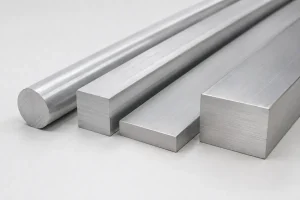
Common tempers of 6061 include 6061-T4, 6061-T6, and 6061-T651. Among them, 6061-T6 is one of the most widely used tempers in industrial manufacturing. After solution treatment and artificial aging, 6061 provides a good balance between strength, corrosion resistance, and machinability.
Due to its balanced properties, 6061 is one of the most commonly used aluminum alloys in mechanical manufacturing and CNC machining. It can provide sufficient structural strength while also allowing complex parts to be manufactured through milling, turning, drilling, and other machining processes.
What Is 6063 Aluminum Alloy?
6063 is also a 6000 series aluminum magnesium silicon alloy and is a heat-treatable aluminum material. Compared with 6061, 6063 contains fewer strengthening elements, resulting in lower mechanical strength.
The main advantage of 6063 is its excellent extrusion performance and surface finish. During extrusion, the material flows easily through dies, allowing manufacturers to produce complex cross-section profiles while maintaining good dimensional consistency and surface quality.
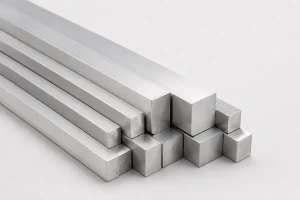
Common tempers include 6063-T5 and 6063-T6, with 6063-T5 being widely used for industrial aluminum profiles. Compared with pursuing maximum strength, 6063 focuses more on formability, structural flexibility, and manufacturing efficiency.
What Are the Differences Between 6061 and 6063 Aluminum?
Although 6061 and 6063 are both 6000 series aluminum alloys, differences in alloy composition and manufacturing characteristics lead to different performance levels, processing methods, and application directions. 6061 is more focused on strength and machining performance, while 6063 is more focused on extrusion capability and surface quality.
Chemical Composition Difference
Both 6061 and 6063 are aluminum-magnesium-silicon alloys, where magnesium and silicon contribute to the strengthening of the material. However, the proportion of alloying elements differs between the two materials, resulting in different mechanical and manufacturing properties.
6061 contains higher levels of magnesium, silicon, copper, and chromium. These strengthening elements improve mechanical performance after heat treatment. In contrast, 6063 reduces some strengthening elements to improve extrusion performance and formability.
| Element | 6061 Aluminum | 6063 Aluminum |
|---|---|---|
| Magnesium Mg | 0.8–1.2% | 0.45–0.9% |
| Silicon Si | 0.4–0.8% | 0.2–0.6% |
| Copper Cu | 0.15–0.4% | ≤0.1% |
| Chromium Cr | 0.04–0.35% | ≤0.1% |
| Iron Fe | ≤0.7% | ≤0.35% |
From the chemical composition, 6061 is designed more toward improving material strength, while 6063 is designed more toward improving extrusion performance and forming capability.
Mechanical Properties Difference
Mechanical properties are one of the most significant differences between 6061 and 6063. Due to differences in alloying elements, the two materials show different strength levels after heat treatment.
The following data is based on commonly used T6 tempers:
| Property | 6061-T6 | 6063-T6 |
|---|---|---|
| Tensile Strength | Approx. 290 MPa | Approx. 230 MPa |
| Yield Strength | Approx. 240 MPa | Approx. 170 MPa |
| Hardness | Approx. 95 HB | Approx. 73 HB |
| Elongation | 8%-12% | 8%-12% |
From the mechanical properties, 6061 provides higher tensile strength, yield strength, and hardness, making it more suitable for parts that require load-bearing capability. Higher strength helps components maintain structural stability under long-term mechanical stress.
Although 6063 has lower strength than 6061, it can still meet the requirements of many lightweight structures while providing better manufacturing flexibility.
The biggest manufacturing difference between 6061 and 6063 aluminum is their suitability for different production methods. Although both alloys can be processed, they have different advantages depending on the manufacturing approach.
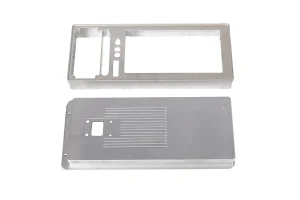
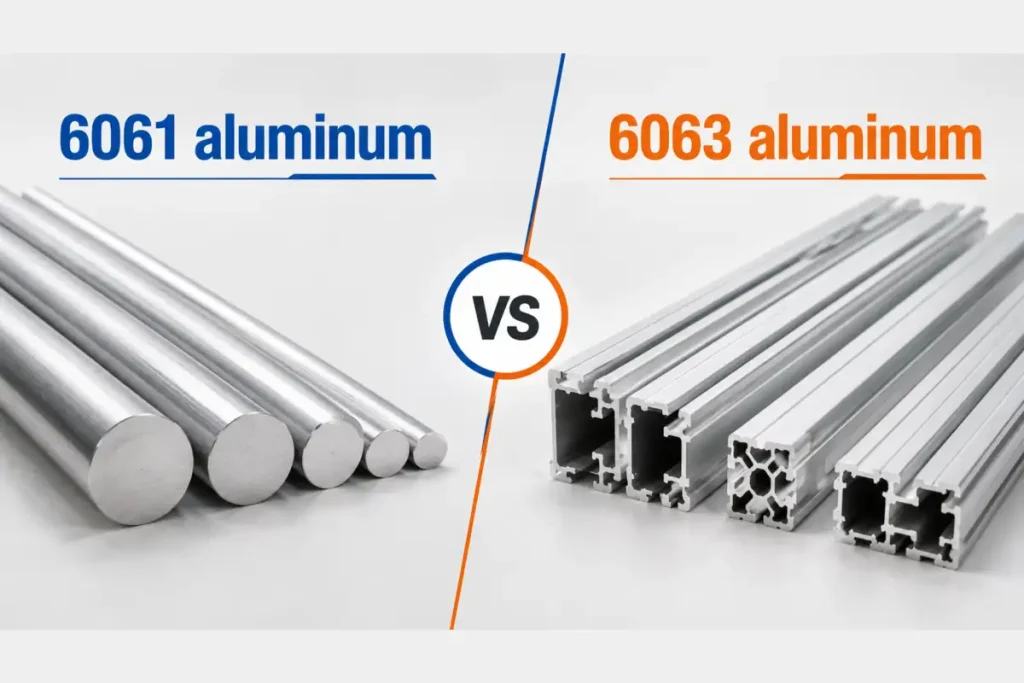
6061 is commonly supplied in the form of plates, bars, and blocks, making it more suitable for machining processes. Due to its good cutting performance, 6061 can be processed through CNC milling, turning, drilling, and tapping to manufacture complex parts while maintaining good dimensional accuracy.
6063 is more suitable for extrusion manufacturing. Through extrusion dies, the material can be directly formed into profiles with complex cross-sections, reducing material removal and improving material utilization and production efficiency.
For projects that require machining complex parts from solid material, 6061 is usually a better choice. For projects based on extruded profiles, 6063 can provide a more efficient manufacturing solution.
Weldability Difference
Both 6061 and 6063 aluminum alloys have good weldability and can be welded using common aluminum welding methods such as TIG welding and MIG welding.
However, the heat generated during welding can affect the original strengthened condition of aluminum alloys, causing changes in the properties around the heat-affected zone. Since 6061 has higher strength, welded structures made from 6061 require more attention to the performance changes after welding, especially in load-bearing applications.
6063 is commonly used in welded frame structures because of its frequent use in aluminum profiles. Regardless of the material selected, manufacturers still need to consider welding deformation, joint strength, and post-welding machining requirements.
Price Difference
The price of 6061 and 6063 aluminum depends on several factors, including material temper, dimensions, supply form, order quantity, and aluminum market conditions. Therefore, there is no fixed price difference between the two materials.
In general, the raw material prices of 6061 and 6063 are usually within a similar range.
| Material | Reference Price |
|---|---|
| 6061 Aluminum | Approx. $3–5/kg |
| 6063 Aluminum | Approx. $3–5/kg |
However, material price alone does not represent the final part cost. Although 6063 can reduce material waste and machining time due to its extrusion capability, 6061 is often more suitable for complex parts and customized machining projects.
Therefore, material selection should consider not only the price per kilogram but also factors such as raw material form, machining time, material utilization, and production volume.
Applications of 6061 and 6063 Aluminum
The application differences between 6061 and 6063 mainly come from their different performance characteristics. 6061 is more focused on functional components, while 6063 is more commonly used for profile structures and lightweight applications.
Due to its higher strength and good machinability, 6061 is commonly used for industrial parts that require machining or structural performance, such as:
-
- CNC machined parts
-
- Industrial mechanical components
-
- Brackets
-
- Connectors
-
- Mounting plates
-
- Structural components
6063 is preferred for profile-based structures because of its excellent extrusion performance and surface finish. Typical applications include:
-
- Industrial aluminum profiles
-
- Equipment frames
-
- Guide rails
-
- Extruded heat sink profiles
-
- Lightweight support structures
In actual industrial projects, both materials may be used together. For example, an automation machine may use 6063 aluminum profiles as the main frame while using CNC-machined 6061 components for mounting plates, brackets, and connection parts.
How to Choose Between 6061 and 6063 Aluminum?
Choosing between 6061 and 6063 depends on the part function, manufacturing method, and final operating environment. Neither material is universally better than the other; they are designed for different manufacturing requirements.
If a project requires higher strength, load-bearing capability, and machining performance, 6061 is usually the more suitable option. It is commonly selected for industrial parts manufactured through milling, turning, drilling, and other machining processes.
If a project requires extrusion capability, continuous cross-sections, or aluminum profile structures, 6063 is generally the better choice. It can be efficiently formed through extrusion while reducing the need for additional machining operations.
| Project Requirement | Recommended Material |
|---|---|
| High-strength structural parts | 6061 |
| CNC precision machined parts | 6061 |
| Mechanical connection components | 6061 |
| Mounting plates and brackets | 6061 |
| Aluminum profile structures | 6063 |
| Equipment frames | 6063 |
| Long continuous structures | 6063 |
In practical engineering projects, the material temper should also be considered. For example, although 6061-T6 and 6063-T5 are both 6000 series aluminum alloys, they have different strength levels and manufacturing characteristics.
CNC Aluminum Machining Services
In custom CNC machining projects, material selection directly affects part performance, machining methods, and final manufacturing costs.
6061 is one of the most commonly used aluminum alloys for CNC machined parts because of its good strength, dimensional stability, and machinability. It is suitable for components requiring milling, turning, drilling, tapping, and precise dimensional control.
6063 is more commonly used for profile-based machining projects. For parts manufactured from extruded aluminum profiles, manufacturers can perform cutting, drilling, tapping, and local finishing operations to meet final assembly requirements.
Selecting the right aluminum alloy helps achieve a better balance between mechanical performance, machining efficiency, and overall project cost.
Conclusion
6061 and 6063 are both widely used 6000 series aluminum alloys, but they are designed for different manufacturing requirements.
6061 focuses more on mechanical performance and machinability, providing higher strength and better structural stability. It is more suitable for CNC machined parts, mechanical components, and industrial applications requiring load-bearing capability.
6063 focuses more on extrusion performance and surface quality, making it more suitable for aluminum profiles, frame structures, and continuous cross-section components.
In practical projects, there is no single aluminum alloy that is suitable for every application. Engineers and buyers should select the most appropriate material based on part design, manufacturing method, performance requirements, and cost considerations.