

In mechanical equipment, shafts often connect to gears, hubs, or couplings to transfer rotational power. A conventional keyed connection carries the load mainly through one key, while a spline connection uses multiple tooth surfaces.
Spline shafts are often a better choice when a project requires higher torque capacity, accurate rotational positioning, or axial movement. This article explains their basic structure, common types, materials, machining methods, and applications.
What Is a Spline Shaft?
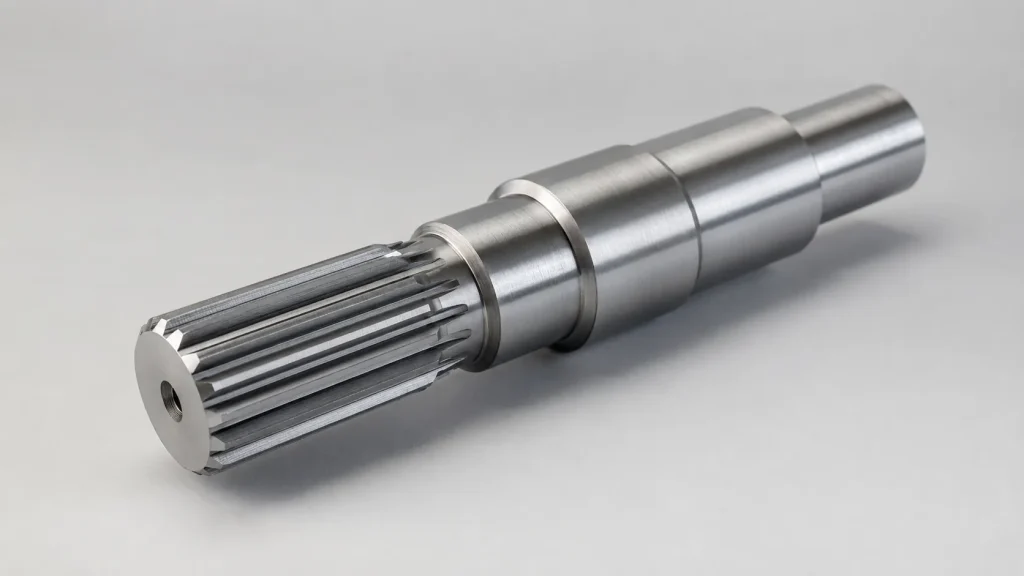
A spline shaft is a transmission shaft with several longitudinal teeth or grooves along its surface. Its external splines engage with matching internal splines in a gear, hub, or coupling, allowing the connected components to rotate together and transmit torque.
Spline connections can be fixed or sliding. Fixed splines do not move axially during operation. Sliding splines allow the connected parts to move along the shaft axis while continuing to transmit power.
The right design depends mainly on torque, positioning requirements, sliding distance, operating speed, and working environment.
What Are the Functions of a Spline Shaft?
A spline shaft does more than transmit power. It can also position components, share loads, and allow axial movement in certain assemblies.
Torque Transmission
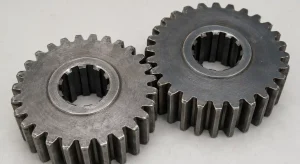
When the external and internal splines engage, multiple tooth surfaces work together to transfer rotational force. This allows the shaft, gear, or hub to rotate as one assembly. Compared with a keyed connection, a spline provides more contact areas for carrying the load.
The amount of torque a spline can carry also depends on the shaft diameter, number of teeth, tooth contact length, material, and heat treatment.
Alignment and Positioning
A spline connection prevents unwanted rotation between the shaft and hub while maintaining the required angular position. This is important in shifting mechanisms, automation equipment, and assemblies that must rotate in sync.
A suitable tooth profile and fit can also help keep the connected components centered, improving operating stability.
Load Distribution
A keyed connection carries the load mainly through one key. A spline connection allows several tooth surfaces to share it. This helps reduce pressure and wear at a single contact point.
However, the internal and external splines must be machined and assembled accurately for the teeth to share the load properly.
Axial Movement
A sliding spline allows the shaft and hub to move along the axis while continuing to transmit torque. This design is often used in telescopic drive shafts, shifting mechanisms, and transmission systems that must accommodate changes in length.
If axial movement is not required, the components can be held in position with a shaft shoulder, retaining ring, nut, or interference fit.
Spline Shaft vs. Keyed Shaft: Which Should You Choose?
Both spline shafts and keyed shafts can connect a shaft to a hub, but they suit different projects.
A keyed shaft is often sufficient when torque requirements are moderate, the design is simple, and machining cost is the main concern. It is also relatively easy to machine, assemble, and repair.
A spline shaft may be a better option when a project requires improved load distribution, accurate rotational positioning, or axial movement. Spline connections are also useful for parts exposed to changing loads or repeated assembly.
However, using a spline does not automatically guarantee higher load capacity. Shaft dimensions, material, tooth contact length, and actual operating load must still be considered.
Common Types of Spline Shafts
Splines are usually classified by tooth profile. Different profiles affect machining difficulty, fit, and suitable applications.
Involute Splines
Involute splines have a tooth shape similar to that of gears. They are common in automotive and industrial transmission systems. Their dimensions can follow standardized modules, pressure angles, and fit classes, making them suitable for volume production and repeated assembly.
Typical applications include automotive transmissions, industrial gearboxes, and drive assemblies. Common standards include ISO 4156, DIN 5480, and ANSI B92.1. The applicable standard should always be confirmed from the production drawing.
Straight-Sided Splines
Straight-sided splines have parallel tooth flanks and a simpler profile than involute splines. They can be produced by milling, form cutting, and other conventional methods.
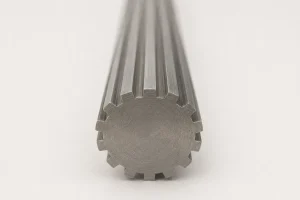
This type is suitable for moderate loads and relatively simple mechanical connections. It is often used in general machinery, low-speed drives, and standard connecting components.
Serrated Splines
Serrated splines usually have shallow V-shaped or angular teeth. This allows more teeth to fit on a relatively small shaft diameter. They are useful when installation space is limited and the connection must maintain angular position or prevent unwanted rotation.
A higher tooth count does not necessarily mean greater torque capacity. Actual performance also depends on tooth shape, material, contact length, and working conditions.
What Materials Are Used for Spline Shafts?
Spline shaft material should be selected according to load, wear, working environment, and machining cost.
Alloy Steel
Spline shafts exposed to high torque, repeated loads, or impact are often made from alloy steel. Materials such as 4140 and 4340 provide good strength and toughness and are commonly used in automotive transmissions, industrial equipment, and heavy machinery.
Quenching and tempering, induction hardening, and other heat treatments can further improve hardness and wear resistance. The treatment should match the part’s strength requirements and final machining needs.
Carbon Steel
Carbon steel is a practical option for moderate loads and cost-sensitive projects. It generally costs less than alloy steel and is also relatively easy to machine.
It is often used for general transmission shafts, connecting shafts, and low-speed industrial components. Heat treatment can be added when greater strength or wear resistance is required.
Stainless Steel
Stainless steel provides better corrosion resistance in wet environments, frequently cleaned equipment, or applications exposed to corrosive substances.
It may be used for spline shafts in food-processing equipment, medical devices, and chemical machinery. Because stainless steel grades vary in strength and machinability, tooth loading and wear must also be considered.
Aluminum Alloy
Aluminum spline shafts may be suitable when weight reduction is important and operating loads are relatively low. Aluminum alloys have a low density and are generally easy to machine.
However, their tooth-surface hardness and wear resistance are usually lower than those of steel. Surface treatment and expected service life should be evaluated when the spline must slide frequently or carry high contact loads.
How Are Splines Machined?
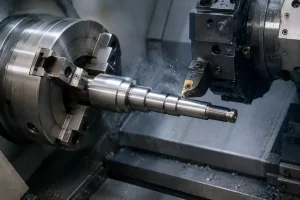
The machining method depends on whether the spline is internal or external, as well as its tooth profile, accuracy, and production quantity. A complete production process may include material cutting, turning, spline machining, heat treatment, finish grinding, and inspection.
Hobbing
Hobbing is mainly used to produce external splines. During machining, the hob and workpiece rotate together at a controlled speed while the cutter moves along the shaft to form the spline teeth.
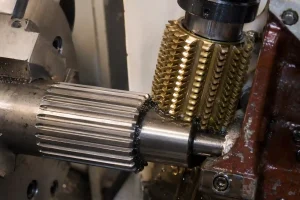
Hobbing is efficient and can maintain consistent tooth geometry. It is therefore well suited to producing large quantities of identical spline shafts.
Broaching
Broaching is mainly used to produce internal spline bores. A broach contains a series of progressively larger cutting teeth. As the tool passes through the bore, the teeth remove material in stages until the complete internal spline is formed.
Broaching is fast and suitable for volume production. However, custom broaches can be expensive and usually support only a limited range of dimensions and profiles. This makes the process less suitable for prototypes or designs that change frequently.
CNC Milling
CNC milling is suitable for non-standard dimensions, prototypes, and small production runs. With an indexing axis or multi-axis machine, the tooth count, tooth width, and machining position can be adjusted according to the drawing.
This method offers greater flexibility, but machining time per part is generally longer than with hobbing or broaching. As order quantities increase, machining time and custom tooling costs should be compared again.
Grinding
Heat treatment may slightly change the shaft dimensions or spline profile. Grinding can be used as a finishing operation when a part requires tighter dimensional accuracy and better tooth-surface quality.
Not every spline shaft needs to be ground. The decision should depend on drawing tolerances, material hardness, operating speed, and expected service life.
What Must Be Controlled During Machining?
Spline machining requires control of the tooth profile, tooth spacing, center position, and fit clearance. If tooth shape or spacing errors are too large, only a few teeth may contact and carry the load, leading to faster wear.
The spline should also share the same centerline as the shaft journals, bearing seats, and mounting faces. Poor alignment can cause runout, uneven loading, and wear during operation.
Heat treatment may bend the shaft or change its dimensions. For precision parts, rough machining, heat treatment, and final grinding must be arranged in the correct order.
Spline clearance should match the fixed or sliding function. Too much clearance can cause looseness and impact, while too little can make assembly difficult or prevent smooth sliding.
Where Are Spline Shafts Used?
Spline shafts are widely used in machinery that must transmit torque, maintain rotational position, or allow axial movement.
Automotive Applications
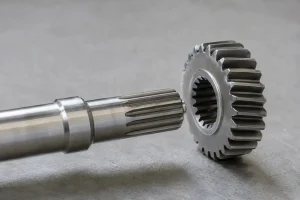
Automotive transmissions, clutch hubs, axle shafts, drive shafts, and steering systems may all use spline connections. Some drive shafts also use sliding splines to accommodate suspension movement or changes in installation length.
These parts operate under continuous rotation and changing torque, so they usually require good strength, wear resistance, and a stable fit.
Industrial Machinery
Machine tools, automation equipment, industrial gearboxes, and other transmission systems often use spline shafts to connect gears, couplings, and driven components.
These applications generally require accurate rotation, positioning, and stable operation. For mechanisms that frequently start, stop, or reverse direction, looseness at the connection must also be controlled.
Agricultural Machinery
Spline connections are commonly used in tractor transmissions, power take-off systems, and agricultural implement shafts. PTO splines transfer power to external equipment while allowing convenient installation and removal.
Agricultural machinery is often exposed to mud, dust, impact, and heavy loads. Material, lubrication, corrosion protection, and sealing should therefore be selected for the actual working environment.
Aerospace Applications
Actuation systems, accessory drives, and some high-performance rotating components may also use spline connections.
These parts often have strict requirements for weight, strength, service life, and assembly accuracy. Material selection, heat treatment, surface finishing, and inspection must follow the relevant drawings and project specifications.
Custom Spline Shaft Manufacturing at Minghe
Minghe manufactures custom spline shafts according to customer drawings, material requirements, tolerances, and production quantities. Available materials include alloy steel, carbon steel, stainless steel, and aluminum, with suitable heat treatment and surface finishing options for different strength, hardness, and wear requirements.
From prototypes and small batches to stable volume production, we can select an appropriate machining method based on the spline profile, shaft dimensions, and fit requirements. Submit your CAD file or part drawing for a manufacturing review and quotation.
Conclusion
Selecting a spline shaft begins with torque, positioning, axial movement, and working environment. Involute splines suit standardized transmission connections, straight-sided splines provide a simpler structure, and sliding splines allow axial movement while continuing to transmit power.
Material and machining method should also match the production requirements. Alloy steel is suitable for continuous or repeated loads, hobbing and broaching support stable volume production, and CNC milling offers greater flexibility for non-standard dimensions and small orders.
Choosing the right spline type, material, and machining process—and properly controlling tooth geometry, alignment, and fit clearance—helps ensure smooth assembly and reliable long-term operation.