

端面铣削是一种常见的铣削 加工方式,它使用刀具从工件表面去除材料,从而形成平整光滑的表面。
什么是端面铣削?
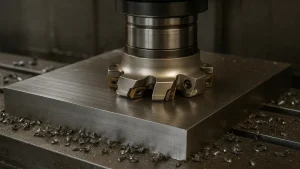
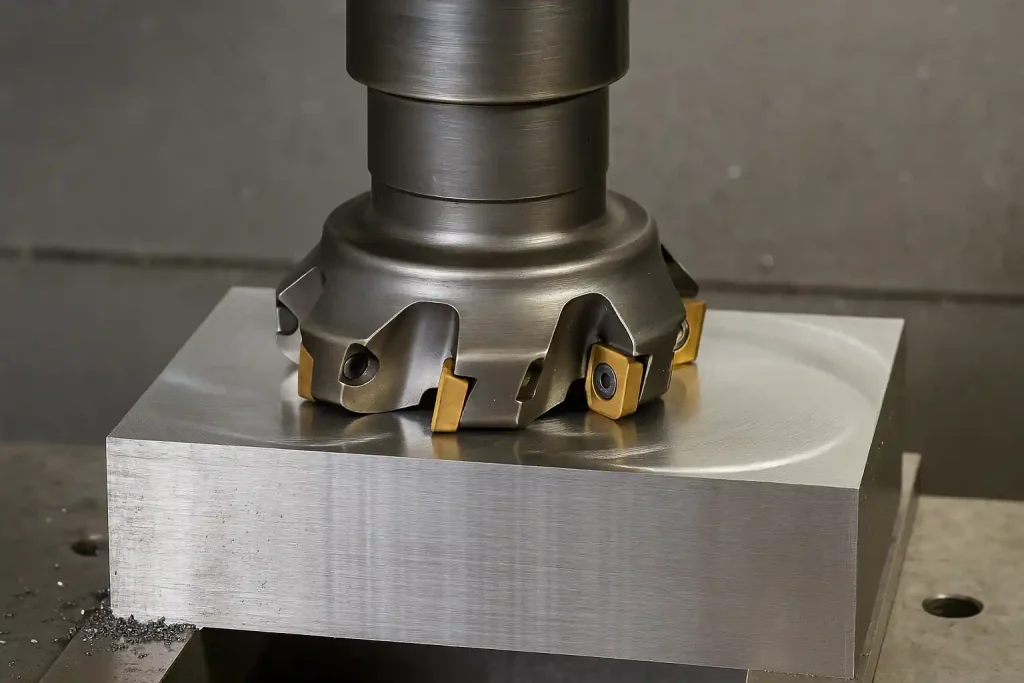
端面铣削是数控加工中一项基础且应用广泛的工序。它利用旋转刀具加工出一个平整的平面。与其他铣削方法(例如加工轮廓或开槽)不同,端面铣削的主要目标是高效地从大面积表面去除材料,从而获得光滑平整的表面。该工序通常是加工过程的第一步,为后续所有工序提供一个干净、精确的基准面。
端面铣削的工作原理
端面铣削工艺依赖于铣刀独特的几何形状。切削主要由刀具的周边切削刃完成,端面则形成最终的表面光洁度。铣刀通常安装在机床主轴上,其旋转轴线垂直于工件表面。机床带动铣刀在材料上移动,每次走刀都去除一层材料。
端面铣削主要有两种切削方式:
爬升铣削
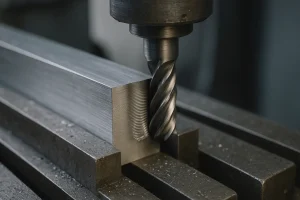
刀具的旋转方向与进给运动方向相同。这种方法通常能获得更好的表面光洁度和更长的刀具寿命,因为切削力有助于将工件拉向刀具。
传统铣削
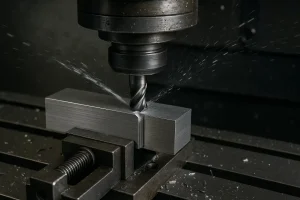
刀具的旋转方向与进给运动方向相反。这会导致刀具磨损更快、加工表面更粗糙,但有时用于穿透坚硬的外层。
端面铣削的关键加工参数包括主轴转速、进给速度和切削深度。对这些参数的精确控制对于获得所需的表面光洁度、刀具寿命和材料去除率至关重要。
周边铣削和端面铣削有什么区别?
虽然端面铣削和周边铣削都是核心铣削操作,但根据刀具与工件的啮合方式,它们的目的却截然不同。
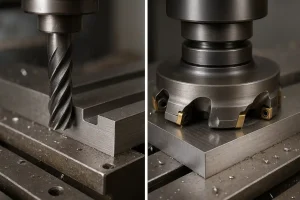
- 切削方式:端面铣削使用刀具的端面,而周边铣削使用刀具的侧面(周边)。
- 用途:端面铣削用于加工平坦的平面。周边铣削用于加工槽、沟槽和复杂轮廓。
- 刀具啮合方式:在端面铣削中,刀具轴线通常垂直于被加工表面。在周边铣削中,刀具轴线平行于加工表面。
理解这一关键区别对于为特定作业选择正确的操作至关重要。
面铣刀的类型及选择
The choice of a face milling cutter is critical to a project’s success, as it directly impacts efficiency, tool life, and surface quality. The most common tool used is the indexable insert cutter, which features replaceable carbide inserts. These cutters offer great versatility, as different inserts can be used for various materials and applications.
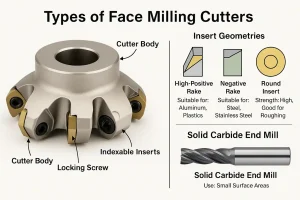
The inserts themselves are available in a range of geometries, each designed for a specific purpose:
- High-Positive Rake Inserts: Ideal for machining soft materials like aluminum and plastics, these inserts have a sharp edge that shears the material cleanly, reducing cutting forces and preventing built-up edge.
- Negative Rake Inserts: Used for tougher materials like steel and stainless steel, these inserts are very robust and designed to withstand high cutting forces and heat.
- Round Inserts: Offer a stronger cutting edge and are excellent for roughing operations due to their ability to spread cutting forces over a larger area, reducing wear.
For smaller jobs or precision work, solid carbide end mills can also be used for face milling, though their primary purpose is typically profiling and slotting.
Key Factors in Cutter Selection:
- Workpiece Material: The hardness and type of material dictate the required insert grade and geometry.
- Machine Rigidity: A more rigid machine can handle larger, heavier cutters with negative-rake inserts.
- Desired Finish: The required surface finish will influence the choice of insert geometry and corner radius.
Advantages and Limitations of Face Milling
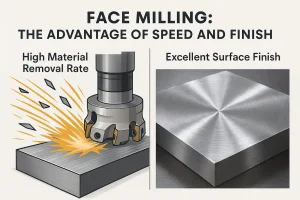
Advantages:
- High Material Removal Rate: Face milling is exceptionally efficient at removing large amounts of material quickly, making it ideal for roughing operations.
- Excellent Surface Finish: When performed correctly, face milling can produce a very flat and smooth surface, often eliminating the need for further finishing processes.
- Versatility: It can be used on a wide range of materials, from soft aluminum to hard steel alloys.
Limitations:
- Limited Geometry: Face milling is confined to creating flat surfaces. It is not suitable for generating complex 2D or 3D profiles, slots, or pockets.
- Machine Requirements: To achieve high efficiency, face milling requires a rigid machine with sufficient horsepower to handle the large cutting forces involved.
Typical Applications of Face Milling
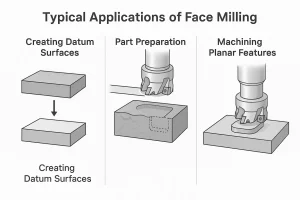
- Creating Datum Surfaces: It is commonly used to establish a precise, flat reference plane on a raw workpiece for subsequent machining operations.
- Part Preparation: Before complex operations like pocketing or contouring, face milling is used to clean up the workpiece surface and ensure a level starting point.
- 加工平面特征:此操作非常适合在零件上创建平面凸台、垫片和其他凸起的平面特征。
结论
端面铣削是数控加工中的一项基础技能,对于制造平整、精确的表面至关重要。通过了解其工作原理、选择合适的刀具并认识到其优势和局限性,您可以有效地利用此操作来准备工件并获得高质量的加工结果。