

With the growing popularity of wind, solar, and hydroelectric power, the scale of energy projects continues to expand. Throughout the construction chain of these energy facilities, manufacturing support capacity is a critical component for project success, transforming design blueprints into actual equipment and supporting daily system operations.
In the energy manufacturing sector, CNC machining is responsible for the production of equipment components. Through standardized manufacturing processes, it provides a consistent supply of parts for energy projects, ensuring performance uniformity across various applications and providing stable support for actual operation.
CNC Machining in Renewable Energy Systems
In the assembly of energy facilities, CNC machining is a common manufacturing process, widely used in the production of critical components for wind power, solar systems, and hydroelectric power.
Wind Power Applications
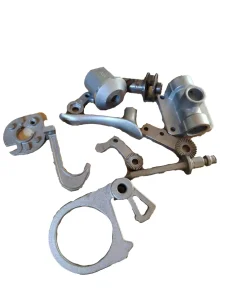
Wind power equipment consists of many large rotating components that must operate in outdoor environments for extended periods. CNC machining is primarily used to manufacture gearbox parts, bearing housings, and core components for pitch systems. This ensures that these parts maintain a tight fit under long-term rotation and load, reducing equipment vibration or wear caused by part deviation.
Solar Energy Applications
Solar power plants often involve large-scale mounting structures that require a high degree of standardization. CNC machining is primarily used to produce mounting brackets, precision rails, and positioning devices. Standardized processing ensures that every part in a large solar array has identical dimensions, allowing construction teams to assemble them quickly and neatly on-site, thereby increasing construction efficiency.
Hydro and Tidal Energy Applications
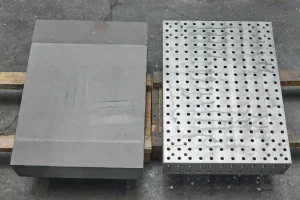
Hydroelectric and tidal energy equipment must operate in water for long periods, requiring high structural precision and sealing. CNC machining is mainly used to produce impellers, pump bodies, and sealed structural parts. Precise control makes these parts more uniform, reducing resistance from water flow and ensuring that connections are tightly fitted for better waterproofing and corrosion resistance.
Hydrogen and Energy Storage Applications
In hydrogen and energy storage equipment, many parts must withstand high pressure, requiring high precision at connection points. CNC machining is primarily used to manufacture high-pressure valves, precision fittings, and equipment housings. Accurate formation of these parts ensures excellent sealing during assembly, effectively reducing energy loss or gas leakage during storage and transmission.
Advantages of CNC Machining for the Renewable Energy Industry
In the engineering practice of energy equipment, CNC machining offers these core advantages:
Complex Geometry Formation
The shapes of energy equipment (such as blades and housings) are often very complex. CNC machining is not limited by part geometry; whether it is a flat surface or a complex curved surface, the machine can form it in a single process, allowing your design drawings to become reality without concern for manufacturing feasibility.
Consistent Batch Accuracy
Energy equipment requires batch installation and has strict specifications. Controlled by digital programs, CNC machining ensures that every finished piece is identical in size. This not only reduces the difficulty of on-site assembly adjustments but also lowers the risk of equipment failure caused by part discrepancies during operation.
Versatile Material Compatibility
Energy equipment often requires high-strength steel, heat-resistant alloys, or special engineering plastics to cope with harsh conditions. CNC machining is a mature technology capable of efficiently handling these high-performance materials, allowing you to choose the most suitable material for your project requirements with stable results.
Flexible R&D Iteration
Energy technology evolves rapidly, often requiring frequent structural adjustments. CNC machining eliminates the need for expensive custom molds; paths can be adjusted simply by modifying the computer program. This allows you to obtain improved samples quickly and at a lower cost, even during the R&D or prototyping phases, effectively shortening project timelines.
Common Materials in the Energy Sector
Energy equipment has strict performance requirements for materials. The four most commonly used material categories in the industry include:
Structural Steel
Represented by alloy steels like 42CrMo. With high strength and excellent fatigue resistance, this is the first choice for critical load-bearing components such as wind turbine gears and shafts, ensuring structural stability under long-term high-load mechanical stress.
Austenitic Stainless Steel
Represented by stainless steels like 316L. Its superior corrosion resistance makes it the core material for underwater energy facilities or offshore wind power components, effectively solving industry problems where parts are prone to rust and wear in humid or saline environments.
High-Performance Aluminum Alloys
Represented by aluminum alloys like 7075-T6. In pursuit of lightweight energy support structures, aluminum alloys stand out for their high strength-to-weight ratio, meeting structural strength requirements while reducing overall equipment weight, thus improving transport and installation convenience.
Engineering Plastics
Represented by specialty materials like PEEK. These materials feature excellent wear resistance, self-lubricating properties, and electrical insulation. They are often used for precision insulating parts or wear-resistant bushings, ensuring the flexibility and longevity of moving parts even without additional lubrication.
Common Processes for Energy Components
Equipment performance relies heavily on manufacturing precision. We ensure quality through these core processes based on specific component structural needs:
Multi-Axis Milling
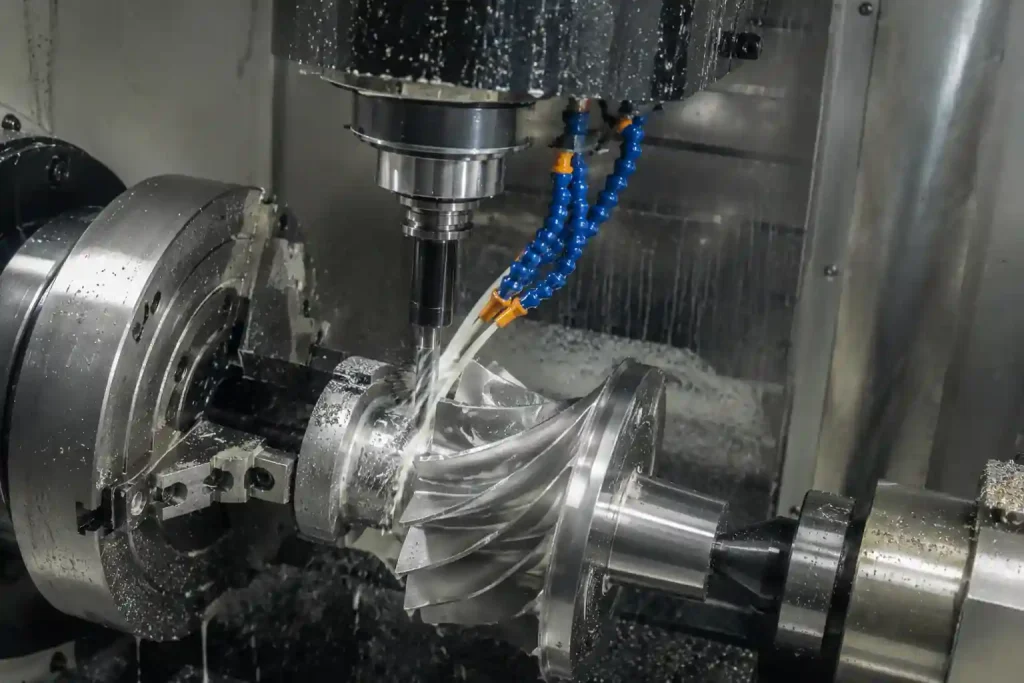
Specialized for complex shapes like impellers and fluid channels. Through multi-axis coordinated cutting, complex curved geometric structures can be directly machined, ensuring parts fully conform to fluid models and thereby improving energy conversion efficiency.
Precision Turning
Used for rotating parts such as shafts and seal covers. The core advantage of this process is high cylindricity and surface finish, ensuring perfect fit and alignment in high-pressure, high-speed environments to completely eliminate leakage risks.
Precision Boring
Focused on large transmission housings or critical bore positions. This process precisely controls hole diameter and coaxiality, ensuring that all transmission components are in a zero-error state after installation, preventing early equipment damage caused by vibration or misalignment.
5-Axis Machining
Targeted at complex, irregular housings. By completing all machining actions in a single setup, it eliminates cumulative errors from multiple re-positionings, ensuring high assembly standards while significantly shortening processing times for high-difficulty parts.
Future Trends in the Renewable Energy Industry
As the demand for energy transition deepens, the integration of manufacturing technologies will continue to drive industry progress. Digital production, relying on real-time data analysis, allows for the optimization of CNC equipment based on energy system feedback, significantly improving component quality. Meanwhile, green production practices such as Minimum Quantity Lubrication (MQL) and dry cutting help minimize resource consumption and reduce the overall environmental footprint. Furthermore, the development of repair and maintenance solutions, particularly the combination of laser cladding and precision CNC milling, provides sustainable options for extending the service life of critical wear parts.
Conclusion
The stable operation of energy systems is fundamentally dependent on high-quality components. CNC machining ensures that every part fits precisely, making equipment more durable and less prone to failure through its extreme precision and flexibility. Choosing this mature and efficient manufacturing method is a reliable approach to safeguarding the long-term operational efficiency of energy projects.