
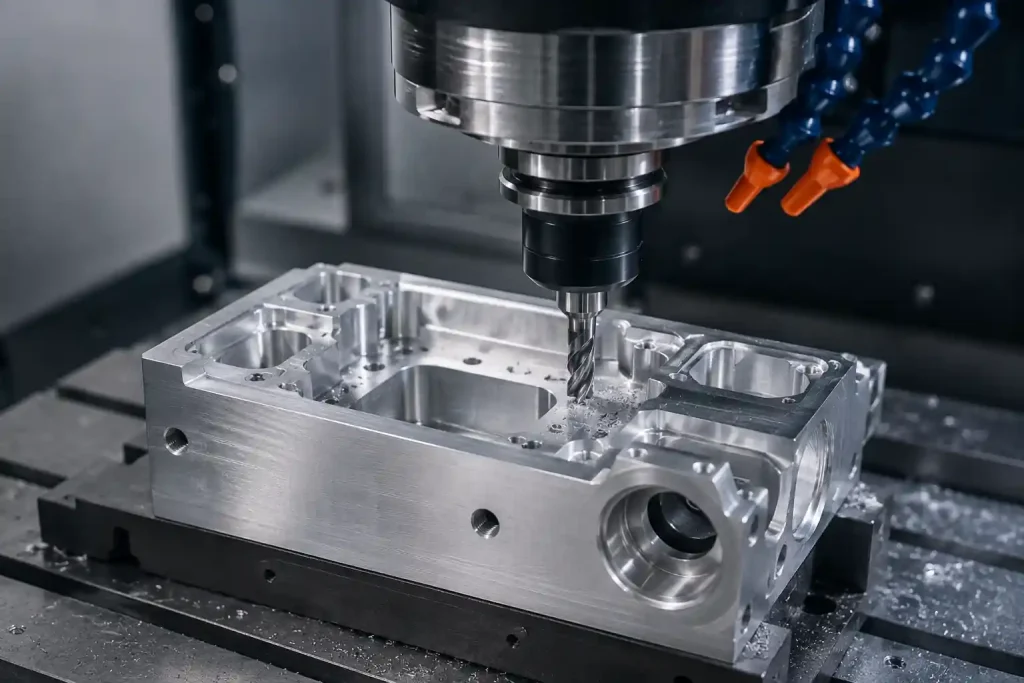
CNC machining quotes are not determined solely by part size. Material, structural complexity, tolerances, workholding, inspection, post-processing, and order volume all contribute to price variations. This article analyzes the cost components of CNC machining, helping engineers and purchasing professionals identify core expenditures to reduce unnecessary manufacturing waste.
CNC Machining Cost Components
A professional quote for custom parts reflects the total resources consumed from raw material procurement to final delivery.
Material Costs
Material costs primarily stem from the raw stock, but billet dimensions and material utilization rates significantly influence the final quote. It is important to note that a low material price does not guarantee a low part cost; if a material is difficult to machine, causes rapid tool wear, or requires an oversized billet, the final manufacturing expense may exceed that of more premium materials.
Common Material Price References
| 材料 | Price Reference |
| 碳钢 | $ |
| 铝合金 | $–$$ |
| 工程塑料 | $–$$$ |
| 不锈钢 | $$ |
| 黄铜 | $$–$$$ |
| Hardened Steel | $$–$$$$ |
| 钛 | $$$$ |
Note: $ represents a relative price reference; actual costs depend on grade, specification, and procurement conditions.
Programming and Process Planning
CAM programming and process planning represent a significant upfront engineering investment. The cost of complex parts stems not just from cutting, but from detailed toolpath planning, sequence verification, and first-article confirmation. For small-batch prototypes, these preparation expenses carry more weight in the per-part price.
Setup and Workholding
Each additional setup increases manual alignment and machine adjustment time. Complex designs requiring part flipping, custom soft jaws, or dedicated fixtures result in higher setup labor and precision verification expenses.
Actual Machining Time
Even for parts of similar size, machining time can vary drastically. In CNC milling services, open faces and shallow pockets allow for high-speed cutting, while deep cavities, small internal radii, and thin-walled structures require conservative parameters, leading to increased machine time and higher operating costs.
Reference Machine Hourly Rate
| Machine Type | Reference Hourly Rate |
| CNC Turning Center | $35–60 / hour |
| 3-axis CNC Milling | $40–60 / hour |
| 4-axis CNC Machining | $50–80 / hour |
| 5-axis CNC Machining | $75–120 / hour |
Note: These are common reference hourly rates. Actual quotes vary by equipment grade, region, setup difficulty, and order requirements.
Tooling Consumption
Tooling costs encompass more than just the purchase price; they include the labor involved in tool changes and the time costs associated with reduced cutting parameters to mitigate the risk of breakage. When machining hardened materials, these hidden expenses are factored into the unit cost.
Inspection and Quality Control
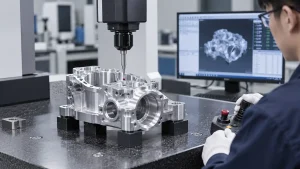
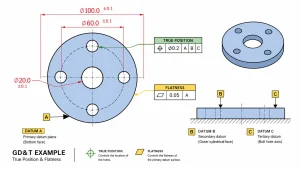
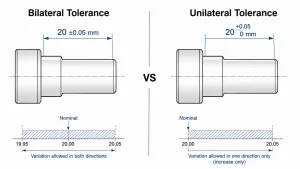
Inspection costs are particularly significant for high-precision parts. When defining CNC machining tolerances, strict requirements should be limited to functional surfaces instead of being applied to every non-critical area.
Surface Treatment Costs
Surface treatment expenses include more than just the process itself; they involve masking, logistical communication, outbound transportation, and wait times. These outsourced steps often entail additional management and administrative overhead.
Common Surface Treatment Cost Reference
| Treatment Process | Cost Reference |
| Deburring | $ |
| Cleaning | $ |
| 抛珠 | $–$$ |
| 黑色氧化物 | $$ |
| 钝化 | $$ |
| 阳极氧化 | $$ |
| 电镀 | $$–$$$ |
| 抛光 | $$–$$$ |
| Protective Packaging | $–$$ |
Note: $ represents a relative cost reference; actual fees depend on part size, batch volume, surface requirements, and external conditions.
Heat Treatment Costs
Heat treatment involves batch scheduling, furnace processing, deformation control, and secondary finishing. Precision parts often require extra stock before treatment and finish machining afterward, which inflates total manufacturing time and expense.
Common Heat Treatment Cost Reference
| Heat Treatment Process | Cost Reference |
| Stress Relieving | $$ |
| Annealing | $$ |
| Normalizing | $$ |
| Quenching | $$–$$$ |
| Tempering | $$ |
| Quench and Temper | $$–$$$ |
| Carburizing | $$$ |
| Nitriding | $$$ |
| Vacuum Heat Treatment | $$$–$$$$ |
| Cryogenic Treatment | $$$–$$$$ |
Note: $ represents a relative cost reference; actual fees depend on material grade, part size, batch volume, hardness requirements, and deformation control.
Batch Size and Fixed Cost Amortization
High prototype prices are rarely due to “expensive machining” but rather the inability to amortize fixed setup and programming costs over many units. For recurring orders, stable process routes allow for better cost control and more competitive pricing.
How to Calculate CNC Machining Cost
CNC machining quotes are not a single-dimensional machine-run fee but a comprehensive evaluation of resources. This logic is intended to help you understand the cost structure rather than serve as a replacement for a formal quote:
CNC machining cost = Material cost + Programming and setup cost + Machine time cost + Tooling cost + Inspection cost + Finishing cost
| Cost Item | Primary Drivers |
| 材料成本 | Material grade, billet size, material utilization |
| Programming & Setup | Part complexity, setup count, first-article confirmation |
| Machine Time Cost | Processing duration, machine type, feed rates |
| Tooling Cost | Material hardness, tool wear, breakage risk |
| Inspection Cost | Tolerance levels, CMM inspection, inspection reports |
| Finishing Cost | Surface treatment, heat treatment, packaging requirements |
A simple aluminum plate has a lower cost due to shorter processing times and minimal inspection. Conversely, a deep-pocket stainless steel housing, even with similar dimensions, will result in a significantly higher quote due to complex workholding, longer cycles, and strict inspection standards.
How to Reduce CNC Machining Cost
During the design review and process planning stages, consider these optimizations to control quotes:
Rationalize Tolerance and Surface Requirements
Clearly distinguish between critical mating interfaces and general geometry in your drawings to avoid the burden of high-precision processing and inspection on non-functional features.
Simplify Complex Structures
Increase corner radii to accommodate larger, more durable tools. If deep cavities or thin walls are unavoidable, confirm tool accessibility and processing risks with your supplier early to optimize the path planning.
Utilize Standard Specifications
Prioritizing standard drill sizes, thread specifications, and common stock dimensions minimizes the need for custom tooling and reduces wait times for procurement.
Plan Batch Sizes
Establishing a stable process route during the prototype stage facilitates more efficient production for recurring orders and maximizes the amortization of fixed costs.
Provide Complete Technical Documentation
Clearly specify which dimensions require full inspection versus standard processing. This eliminates uncertainty and helps suppliers avoid adding risk premiums to your quotes.
Get a Custom CNC Machining Quote
If you are evaluating the manufacturing cost of custom CNC parts, feel free to send us your 3D models and 2D drawings. Our engineering team will assess your design based on material, structure, tolerances, quantity, and post-processing requirements to provide a reliable quote and process suggestion.
结论
CNC machining cost is driven by design requirements, manufacturing difficulty, and quality standards. Controlling these costs is best achieved by reducing unnecessary geometric complexity, avoiding over-specified tolerances, and providing clear, comprehensive technical documentation to minimize uncertainty and risk premiums.