
Thin-walled parts are common in CNC machining, but they require more careful process planning and workholding than standard components. Because of their thin walls and lower structural rigidity, these parts are more sensitive to cutting loads, clamping conditions, and vibration during machining.
These structures are often found in aerospace, automotive, electronics, housings, sleeves, and lightweight brackets. If the machining sequence or fixture support is not properly planned, simply reducing cutting parameters may not be enough to produce a consistent result.
This article explains the basic concept of thin wall machining, common machining challenges, and practical methods for improving part control and machining quality.
What Is Thin Wall Machining?
Thin wall machining refers to CNC machining parts with thin sections, unsupported walls, or low structural rigidity. It is not a single machining method, but a machining condition that may appear in milling, turning, drilling, boring, tapping, or finishing operations.
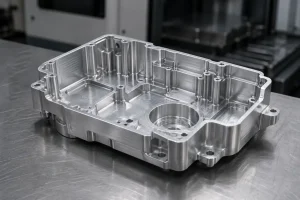
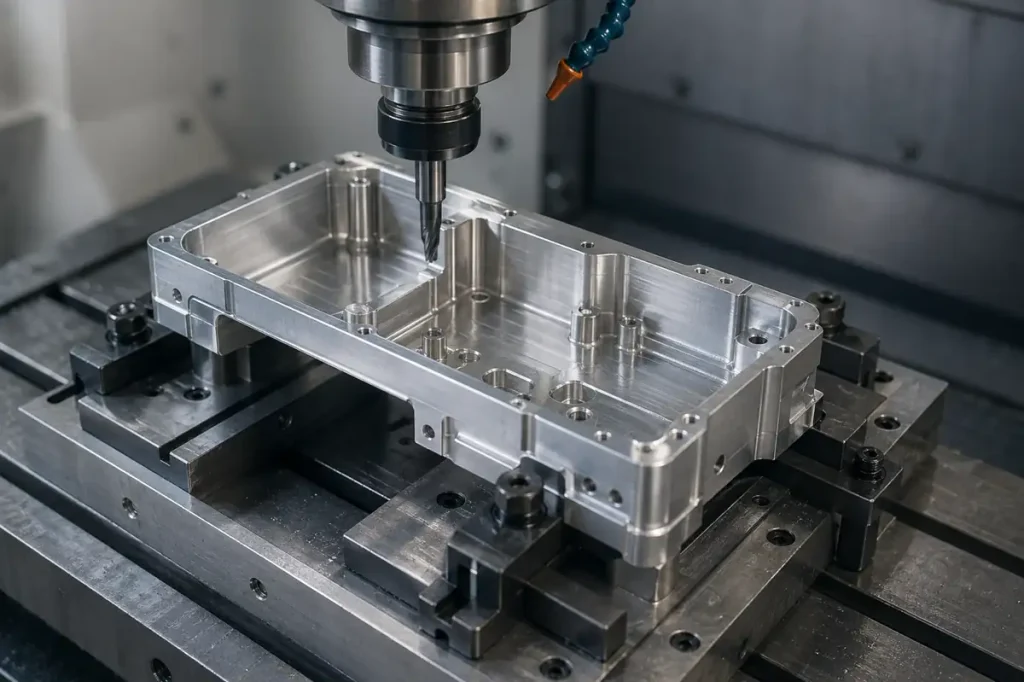
Whether a part is considered thin-walled cannot be judged only by wall thickness. It also depends on the overall part size, wall height, pocket depth, unsupported length, and tolerance requirements. For example, a 2 mm wall may be relatively easy to machine on a small, shallow part, but the same wall thickness on a deep aluminum housing may create a much higher machining risk.
Thin-walled parts can be machined from aluminum, stainless steel, titanium, plastics, and other engineering materials. In CNC machining, thin-walled アルミ部品 are especially common because aluminum is widely used for lightweight housings, brackets, sleeves, frames, and electronic enclosures.
Common Challenges in Thin Wall Machining
Thin wall machining usually becomes difficult when thin sections lose support during cutting, clamping, or material removal. The following challenges are the most common issues that affect part accuracy, surface quality, and repeatability.
Deformation During Machining
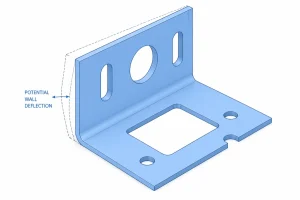
Deformation is one of the most common problems in thin wall machining. When the cutting tool removes material, it applies lateral force to the workpiece. If the wall is thin or poorly supported, the wall may deflect slightly during cutting, resulting in dimensional error.
This problem is more noticeable in deep pockets, tall side walls, large material-removal areas, and thin bottom sections. A part may appear acceptable during machining, but after the tool leaves the surface or the part is released from the fixture, the thin wall may spring back and affect assembly dimensions or wall thickness consistency.
Clamping Distortion
Thin-walled parts require reliable workholding, but clamping force itself can also cause distortion. If the part is clamped too tightly, it may deform before machining begins. If it is clamped too lightly, the part may move or vibrate during cutting.
This makes clamping force and support location especially important for housings, sleeves, thin plates, and frame-like parts. The challenge is to hold the part securely without applying excessive local pressure to weak thin-wall areas.
Vibration and Chatter
Thin-walled structures can amplify vibration, especially when tool overhang is long, wall height is large, the side wall is thin, or fixture support is insufficient.
Vibration can directly affect surface quality, leaving visible tool marks or chatter marks. It can also make tolerances harder to control. In severe cases, vibration may accelerate tool wear or create burrs and local deformation along thin edges.
Residual Stress and Material Movement
When a large amount of material is removed from plate, bar, extrusion, or casting stock, residual stress inside the material may be released. For thin-walled parts, the remaining structure has less stiffness, so this movement can become more visible.
For example, large-area plate ミーリング, deep housing machining, or long thin-wall components may experience warping, bending, or dimensional drift during or after machining. Material condition, stock form, and machining sequence all affect this risk.
Tolerance and Surface Finish Control
Thin-walled parts are usually more difficult to control in terms of dimensions, tolerances, and surface finish. Cutting force, clamping pressure, vibration, and material stress can all influence the final result.
Small tool marks, burrs, or edge defects may become more important when the part has functional surfaces, cosmetic surfaces, holes, or assembly features. For thin-walled components, tolerance should not be evaluated only from the drawing; it should also be checked against part geometry and actual machining behavior.
Thin Wall Machining Strategies and Optimization Tips
Thin wall machining cannot be improved only by lowering cutting parameters. Spindle speed, feed rate, and depth of cut all affect the process, but if the workholding method, support structure, or machining sequence is not suitable, reducing the parameters may still not solve deformation and vibration problems.
A better approach is to control the process from several aspects at the same time, including workholding, cutting force, toolpath strategy, material removal sequence, and finishing allowance. The goal is to prevent the thin sections from losing support too early.
Improve Workholding and Support Stability
Workholding is one of the first issues to solve in thin wall machining. The part needs enough support to resist cutting forces, but excessive clamping pressure may distort it before machining even begins.
For this reason, the goal is not to clamp the part as tightly as possible. Instead, support should be even and well distributed. Depending on the part geometry, soft jaws, custom fixtures, back support, locating pins, or auxiliary clamping structures may be used to reduce local deformation.
For housings, thin plates, sleeves, and frame-like parts, support location is often more important than clamping force alone. Proper support can improve local stiffness and help prevent movement, vibration, or springback during machining.
Remove Material Gradually
Instead of bringing thin walls to final size too early, material should be removed in controlled stages. Removing too much material at the beginning can leave thin sections unsupported before finishing begins.
A more reliable approach is to divide the process into roughing, semi-finishing, and finishing. Roughing removes the main allowance while leaving enough support. Semi-finishing brings the part closer to the final shape. Finishing is then used to control critical thin-wall surfaces and assembly dimensions.
For deep pockets, tall side walls, and large pocketed structures, temporary support or machining allowance may be left in place until the main operations are complete. This helps reduce the risk of the part losing support in the middle of the machining process.
Control Cutting Force
Many deformation and vibration problems in thin wall machining come from excessive cutting force. The greater the side pressure applied to the wall, the easier it is for the thin section to deflect.
Cutting force can be controlled in several ways, such as using sharp tools, reducing tool overhang, controlling depth and width of cut, avoiding sudden heavy cuts, and using multiple light passes. For thin-walled aluminum parts, sharp tools and stable chip evacuation are especially important because a dull tool increases cutting pressure and is more likely to leave tool marks or burrs.
Controlling cutting force does not mean blindly reducing efficiency. The key is to keep the cutting load predictable and avoid sudden local force increases.
Optimize Toolpath and Machining Sequence
Toolpath and machining sequence have a major influence on thin-walled parts. A proper sequence helps the part retain more support during machining and reduces the risk of distortion.
In general, it is better to establish stable datums first, machine the more rigid areas next, and leave the thin-wall areas for later operations. Critical dimensions and thin-wall surfaces should usually be finished when the part is in a more controlled condition. For symmetrical structures, balanced material removal can help reduce uneven stress release.
For deep pockets or housing-type parts, a common approach is to perform internal roughing first, then semi-finishing, and finally finish the side walls, holes, and assembly surfaces. This keeps the part behavior more predictable throughout the machining process.
Plan Finishing Passes Carefully
Finishing thin-walled parts is not only about improving surface quality. The cutting force during finishing and the condition of the remaining structure also need to be considered. If the finishing allowance is too large, the final pass may still push the thin wall. If the allowance is too small, it may not remove errors or tool marks left by earlier operations.
For this reason, finishing allowance should be planned carefully. Thin-wall areas usually benefit from lighter cutting loads, stable toolpaths, and controlled finishing passes. Critical surfaces, holes, and assembly features should be finished while the part still has sufficient support.
If the part will later require anodizing, bead blasting, brushing, or other surface treatments, finishing should also consider edge condition, burr control, and cosmetic surface protection. This helps prevent post-processing from making machining defects more visible.
Post-Machining Considerations for Thin-Walled Parts
Thin-walled parts still need careful handling after machining. Releasing the part from the fixture, removing burrs, inspecting key dimensions, and preparing for surface finishing can all affect the final result.
Check the Part After Unclamping
A thin-walled part may look acceptable while it is still held in the fixture, but the final condition should be checked after unclamping. Springback, slight warping, or dimensional drift may appear once clamping pressure is removed.
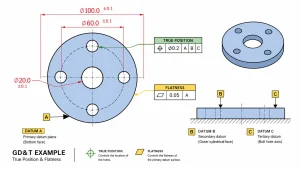
For housings, sleeves, thin plates, and deep-pocket parts, it is useful to check flatness, roundness, wall thickness consistency, hole position, and assembly surfaces in the released state. If the change is noticeable, the machining sequence, fixture support, or material condition may need to be reviewed.
Control Burrs and Edge Damage
Thin edges are more sensitive during deburring. Excessive sanding, chamfering, or manual edge treatment may change edge dimensions or damage cosmetic surfaces.
Deburring should be controlled and consistent, especially around holes, thin openings, sealing edges, and visible surfaces. For parts with assembly or sealing requirements, the edge condition should be confirmed before production.
Inspect Critical Dimensions Again
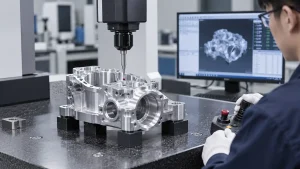
Because thin-walled parts may move after machining or handling, critical dimensions should be checked in the final free state. Important features may include assembly holes, sealing faces, locating surfaces, flatness, roundness, and wall thickness.
For tight-tolerance parts, in-process measurement alone may not be enough. Final inspection should reflect how the part will be used or assembled whenever possible.
Prepare Carefully for Surface Finishing
Many thin-walled aluminum parts require anodizing, bead blasting, brushing, or other surface treatments. Small machining marks, burrs, scratches, or edge defects may become more visible after finishing.
Before surface treatment, cosmetic surfaces, hole edges, thin-wall edges, and functional surfaces should be checked. If the part has appearance requirements, machining and finishing should follow the same quality expectations instead of being treated as separate issues.
Protect Thin Sections During Handling and Packaging
Thin sections can also be damaged during handling, stacking, or shipping. Long side walls, thin edges, open frames, and thin bottom sections may bend or mark if they are not supported correctly.
For these parts, avoid placing pressure directly on thin walls. Separators, soft pads, custom trays, or protected packaging may be needed to keep critical surfaces and thin sections safe before delivery.
結論
Thin wall machining is not only about removing material from a thin section. The main challenge is keeping the part controlled while cutting forces, clamping pressure, vibration, and material movement affect the remaining structure.
A successful thin wall machining process usually requires proper workholding, gradual material removal, controlled cutting force, planned toolpaths, careful finishing, and post-machining inspection. Design choices such as wall thickness, pocket depth, support features, and tolerance requirements also affect whether the part can be machined consistently.
If your part includes thin walls, deep pockets, large material removal, or tight tolerance features, Minhe CNC can review your drawings and suggest a practical CNC machining approach based on geometry, material, tolerance, and surface finish requirements.